


Does an incremental optical encoder possess vibration and shock resistance design?
Release Time : 2025-12-05
In modern industrial automation systems, the incremental optical encoder, as a core sensor for sensing rotational motion, directly impacts the positioning accuracy, operational stability, and even the efficiency of the entire production line. Especially under high-dynamic conditions such as machine tool cutting, high-speed start-stop of packaging machinery, and frequent joint movements of robots, equipment inevitably experiences strong vibrations and instantaneous impacts. If the encoder lacks corresponding vibration and shock resistance, it can lead to signal jitter and counting errors, or even loosening of internal components, grating disk misalignment, or permanent damage.
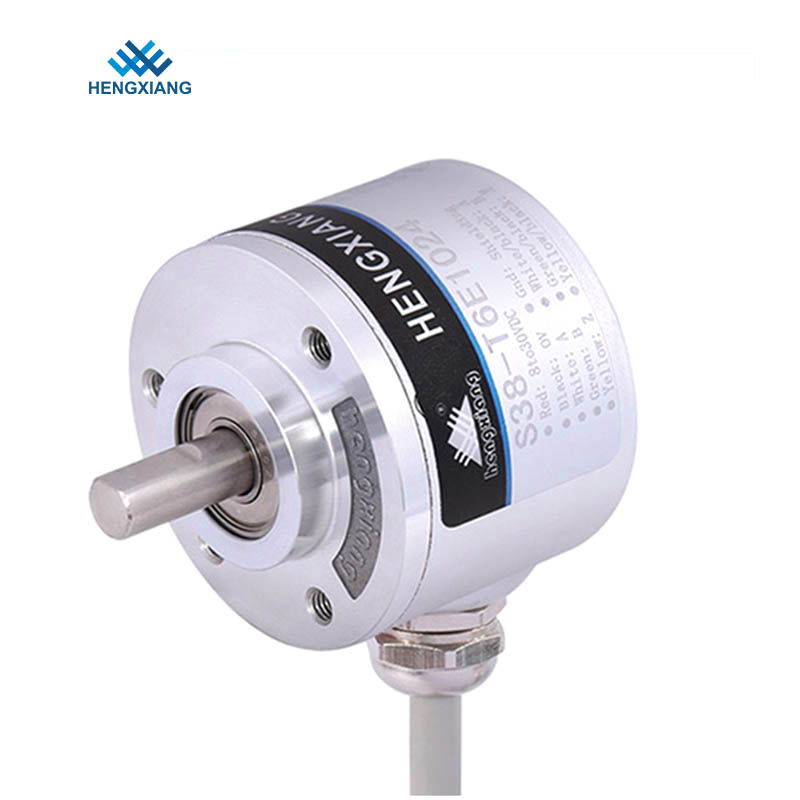
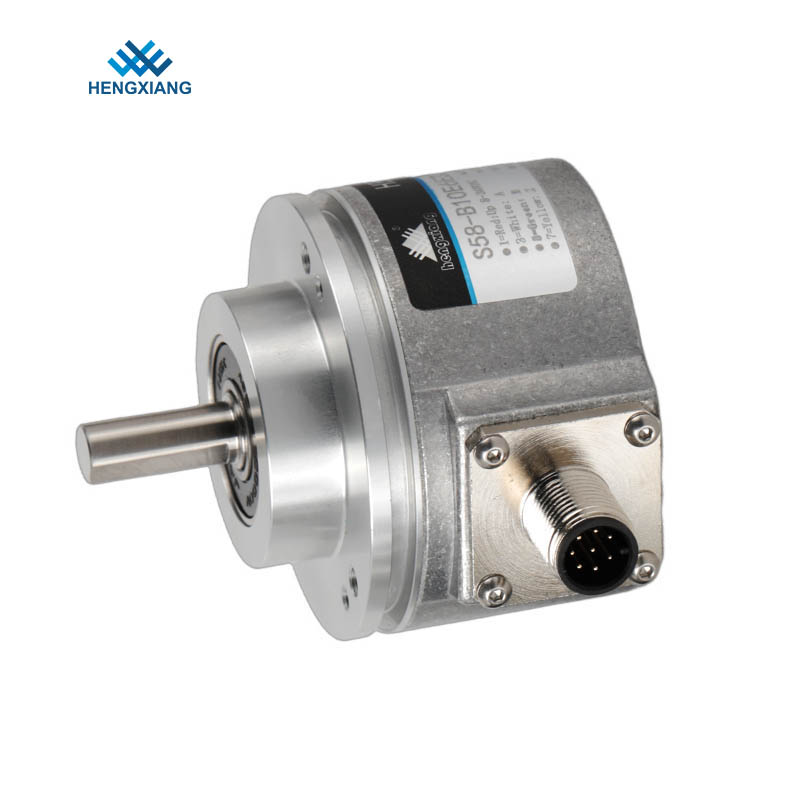
The key to the answer lies in the synergistic optimization of its mechanical structure and material processing. First, high-quality encoders typically use robust metal housings (such as aluminum alloy or stainless steel), providing not only excellent electromagnetic shielding but also effectively absorbing and dispersing external mechanical stress. The housing and end caps are often tightly sealed using precision sealing rings or laser welding to prevent vibration from widening gaps or allowing contaminants to enter.
Second, the core rotating components—the solid shaft and bearing system—are the focus of vibration resistance design. Encoders used in high-dynamic applications are generally equipped with dual ball bearings or high-preload bearing assemblies. This structure significantly improves the radial and axial rigidity of the shaft system, suppressing slight shaft wobble caused by vibration. The shaft itself undergoes tempering or surface hardening treatment, combining strength and toughness, making it less prone to bending or fatigue fracture under repeated impacts. More importantly, the grating code disk (i.e., the optical element with precision-engraved grid lines) is securely fixed to the shaft and isolated from the housing by damping rubber or elastic supports, preventing vibration from being directly transmitted to the optical system, thus protecting the stability of the signal source.
Internal circuitry is equally crucial for interference suppression. Although vibration itself does not directly affect the electrical signal, the accompanying motor start-stop and inverter switching often generate strong electromagnetic noise. Therefore, high-end encoders integrate differential drive circuits (such as the RS422 standard) and filter networks at the signal output end to effectively suppress common-mode interference, ensuring that the pulse signal is not distorted or dropped during long-distance transmission. Some products even pot the PCB board or apply adhesive to reinforce it, preventing solder joints from cracking due to long-term vibration.
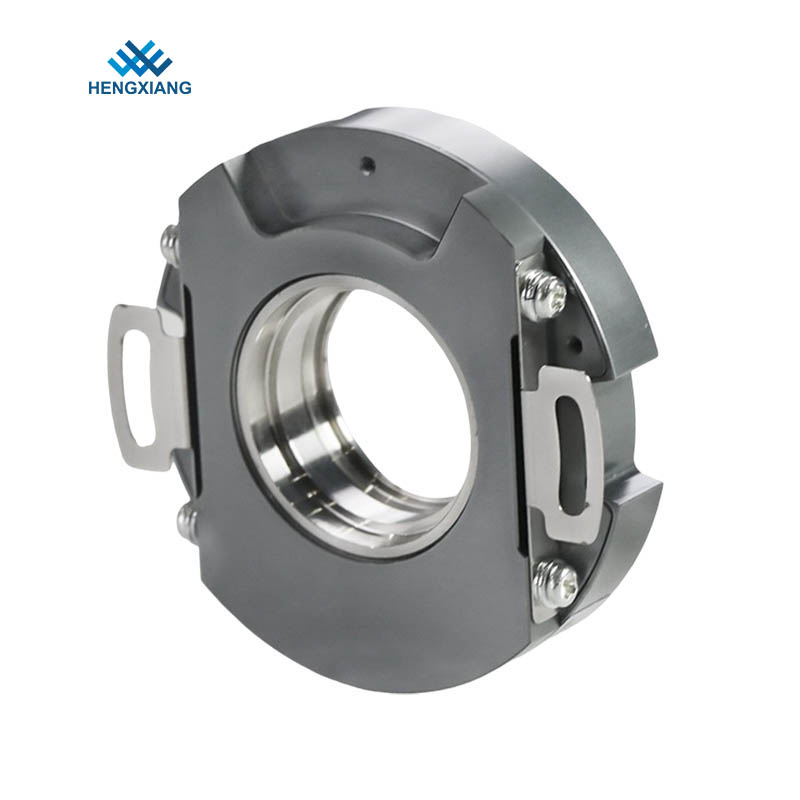
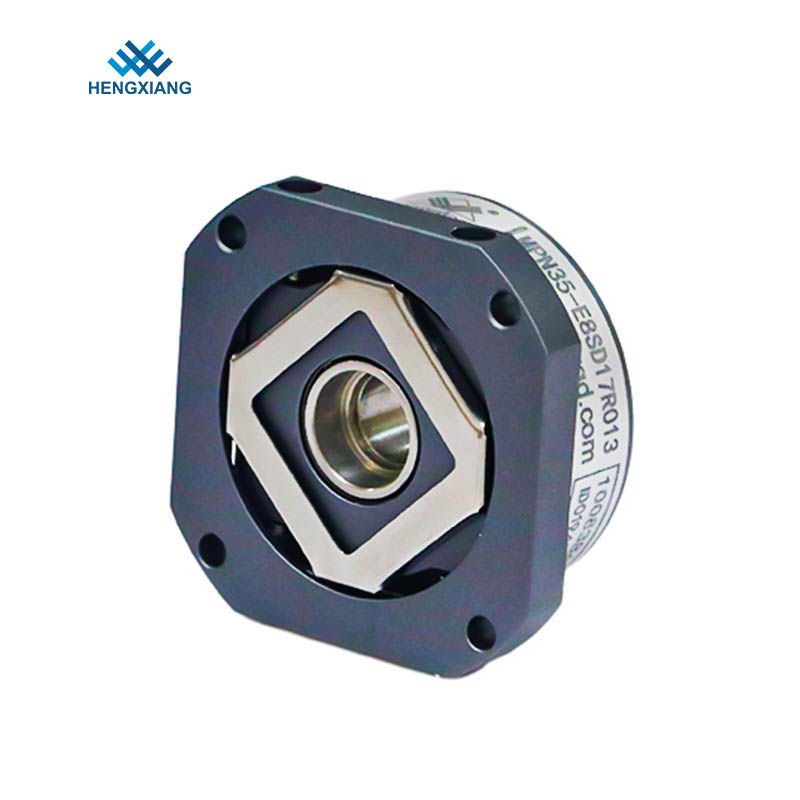
Furthermore, the mounting method also affects vibration resistance. Flange-type or spring-loaded mounting structures effectively mitigate transmitted vibrations from the motor or frame, preventing rigid connections from concentrating all stress on the encoder body. Simultaneously, rigorous dynamic balancing ensures that rotating components experience no additional centrifugal force disturbances during high-speed operation, reducing internal vibration at its source.
Of course, not all encoders labeled "industrial grade" are suitable for high-dynamic scenarios. Some low-cost products may use single bearings, plastic housings, or simple seals, making them prone to signal drift or premature failure under continuous vibration. Therefore, users should pay attention to whether the manufacturer clearly specifies vibration and shock resistance specifications (such as compliance with IEC 60068 mechanical environment testing standards) and prioritize series specifically designed for machine tools, packaging, or robotics.
Ultimately, the value of a truly suitable incremental optical encoder for high-dynamic conditions lies not only in its ability to output pulses but also in its accuracy under vibration. When a machine tool spindle is cutting at high speed or a packaging turntable is rotating rapidly, it silently endures unseen impacts while consistently transmitting accurate position and speed information. This ability to maintain precision amidst turmoil is the ultimate embodiment of the reliability of industrial sensors—using stillness to control movement and stability to guide motion, safeguarding every inch of order in the control system within the rhythm of steel.
The key to the answer lies in the synergistic optimization of its mechanical structure and material processing. First, high-quality encoders typically use robust metal housings (such as aluminum alloy or stainless steel), providing not only excellent electromagnetic shielding but also effectively absorbing and dispersing external mechanical stress. The housing and end caps are often tightly sealed using precision sealing rings or laser welding to prevent vibration from widening gaps or allowing contaminants to enter.
Second, the core rotating components—the solid shaft and bearing system—are the focus of vibration resistance design. Encoders used in high-dynamic applications are generally equipped with dual ball bearings or high-preload bearing assemblies. This structure significantly improves the radial and axial rigidity of the shaft system, suppressing slight shaft wobble caused by vibration. The shaft itself undergoes tempering or surface hardening treatment, combining strength and toughness, making it less prone to bending or fatigue fracture under repeated impacts. More importantly, the grating code disk (i.e., the optical element with precision-engraved grid lines) is securely fixed to the shaft and isolated from the housing by damping rubber or elastic supports, preventing vibration from being directly transmitted to the optical system, thus protecting the stability of the signal source.
Internal circuitry is equally crucial for interference suppression. Although vibration itself does not directly affect the electrical signal, the accompanying motor start-stop and inverter switching often generate strong electromagnetic noise. Therefore, high-end encoders integrate differential drive circuits (such as the RS422 standard) and filter networks at the signal output end to effectively suppress common-mode interference, ensuring that the pulse signal is not distorted or dropped during long-distance transmission. Some products even pot the PCB board or apply adhesive to reinforce it, preventing solder joints from cracking due to long-term vibration.
Furthermore, the mounting method also affects vibration resistance. Flange-type or spring-loaded mounting structures effectively mitigate transmitted vibrations from the motor or frame, preventing rigid connections from concentrating all stress on the encoder body. Simultaneously, rigorous dynamic balancing ensures that rotating components experience no additional centrifugal force disturbances during high-speed operation, reducing internal vibration at its source.
Of course, not all encoders labeled "industrial grade" are suitable for high-dynamic scenarios. Some low-cost products may use single bearings, plastic housings, or simple seals, making them prone to signal drift or premature failure under continuous vibration. Therefore, users should pay attention to whether the manufacturer clearly specifies vibration and shock resistance specifications (such as compliance with IEC 60068 mechanical environment testing standards) and prioritize series specifically designed for machine tools, packaging, or robotics.
Ultimately, the value of a truly suitable incremental optical encoder for high-dynamic conditions lies not only in its ability to output pulses but also in its accuracy under vibration. When a machine tool spindle is cutting at high speed or a packaging turntable is rotating rapidly, it silently endures unseen impacts while consistently transmitting accurate position and speed information. This ability to maintain precision amidst turmoil is the ultimate embodiment of the reliability of industrial sensors—using stillness to control movement and stability to guide motion, safeguarding every inch of order in the control system within the rhythm of steel.