


How does a single-turn solid encoder achieve high-precision position detection using 12-bit Gray code?
Release Time : 2026-04-09
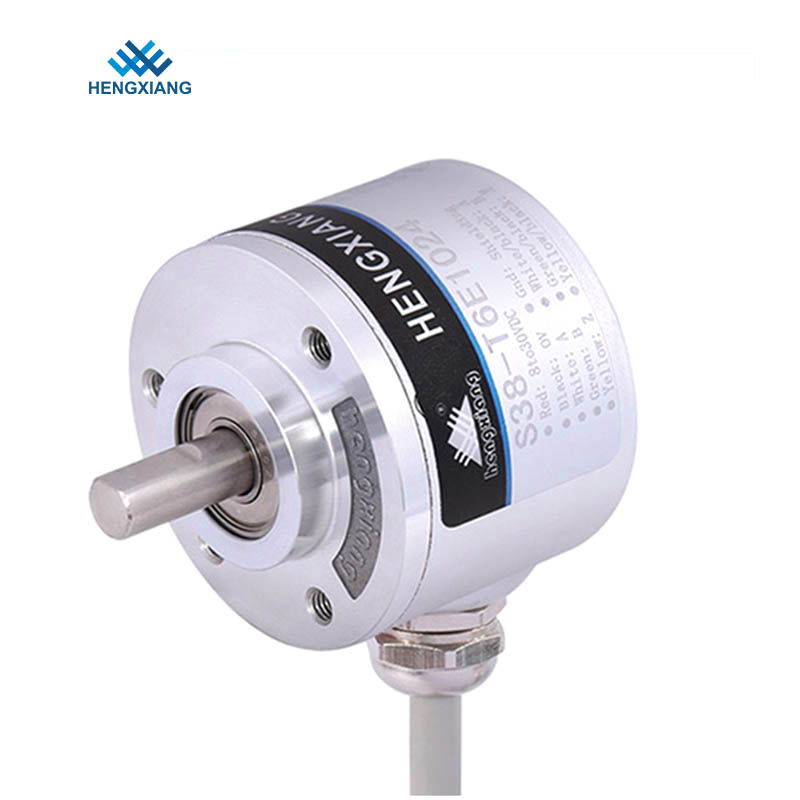
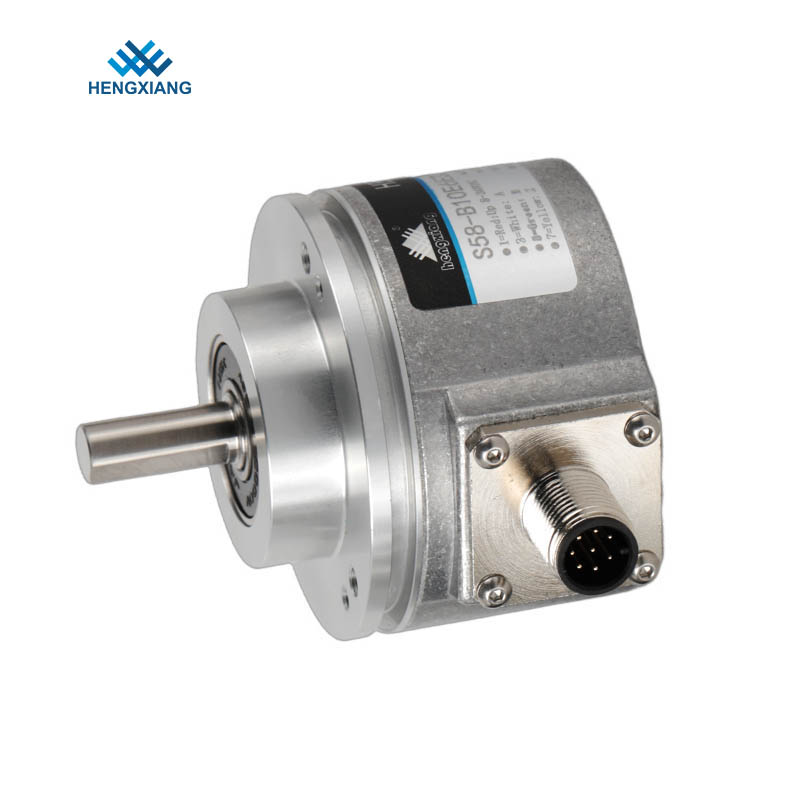
In modern automation and precision control, the accuracy of position detection directly affects the stability and efficiency of equipment operation. As a common position feedback element, the single-turn solid encoder represents the absolute position of the shaft by outputting a unique coded signal. The use of 12-bit Gray code enables high-precision and reliable position detection within a single turn, making it widely used in industrial control and high-precision mechanical systems.
1. 12-bit Encoding Improves Resolution
The accuracy of a single-turn solid encoder primarily stems from its encoding bit depth. 12-bit encoding means that one turn is divided into 2¹², or 4096 discrete position points. Each position corresponds to a unique coded value, enabling precise measurement of subdivided angles. This high resolution allows the encoder to detect minute angular changes, offering significant advantages in applications requiring precise positioning.
2. Gray Code Reduces Error Risk
Gray code offers significant advantages over traditional binary code in terms of encoding methods. Its key feature is that only one bit changes between two adjacent coded values. This "single-bit change" characteristic effectively reduces the risk of misreading during signal switching. Even if a single bit of the signal experiences a brief error due to interference or delay while the encoder rotates, it will not cause a significant deviation in position recognition, thus improving the overall reliability of the measurement.
3. Photoelectric Detection for Signal Acquisition
Single-turn solid encoders typically use photoelectric principles for position detection. Specific light-transmitting and light-blocking patterns are engraved on the encoder disk, corresponding to different Gray code combinations. As the encoder disk rotates with the shaft, photoelectric sensors read the changes in light signals at different positions and convert them into electrical signals for output. Through multi-channel synchronous detection, 12-bit coded information can be acquired simultaneously, enabling real-time determination of the current angle.
4. Parallel Output Improves Response Speed
The 12-bit Gray code is typically output in parallel, meaning each bit corresponds to an independent signal channel. This output method allows for instantaneous reading of the complete position code, avoiding the delay problems caused by serial transmission. In high-speed rotation or rapid positioning scenarios, parallel output ensures that the system acquires accurate position information in a timely manner, improving the response speed and stability of the control system.
5. Anti-interference Design Ensures Stable Accuracy
To achieve high-precision detection in industrial environments, encoders must possess strong anti-interference capabilities. By employing open-collector output and a well-designed circuit, signal transmission stability can be enhanced. Simultaneously, the inherent error-resistant characteristics of Gray code, combined with hardware protection measures, ensure stable output even under complex environments such as vibration and electromagnetic interference.
In summary, the single-turn solid encoder achieves high-precision position detection through 12-bit Gray code, relying on advantages such as high-resolution encoding, Gray code error-resistant characteristics, photoelectric detection principles, and parallel output structure. This technology not only improves the accuracy and reliability of position measurement but also provides stable feedback signals for automated equipment, playing a crucial role in modern industrial control systems.
1. 12-bit Encoding Improves Resolution
The accuracy of a single-turn solid encoder primarily stems from its encoding bit depth. 12-bit encoding means that one turn is divided into 2¹², or 4096 discrete position points. Each position corresponds to a unique coded value, enabling precise measurement of subdivided angles. This high resolution allows the encoder to detect minute angular changes, offering significant advantages in applications requiring precise positioning.
2. Gray Code Reduces Error Risk
Gray code offers significant advantages over traditional binary code in terms of encoding methods. Its key feature is that only one bit changes between two adjacent coded values. This "single-bit change" characteristic effectively reduces the risk of misreading during signal switching. Even if a single bit of the signal experiences a brief error due to interference or delay while the encoder rotates, it will not cause a significant deviation in position recognition, thus improving the overall reliability of the measurement.
3. Photoelectric Detection for Signal Acquisition
Single-turn solid encoders typically use photoelectric principles for position detection. Specific light-transmitting and light-blocking patterns are engraved on the encoder disk, corresponding to different Gray code combinations. As the encoder disk rotates with the shaft, photoelectric sensors read the changes in light signals at different positions and convert them into electrical signals for output. Through multi-channel synchronous detection, 12-bit coded information can be acquired simultaneously, enabling real-time determination of the current angle.
4. Parallel Output Improves Response Speed
The 12-bit Gray code is typically output in parallel, meaning each bit corresponds to an independent signal channel. This output method allows for instantaneous reading of the complete position code, avoiding the delay problems caused by serial transmission. In high-speed rotation or rapid positioning scenarios, parallel output ensures that the system acquires accurate position information in a timely manner, improving the response speed and stability of the control system.
5. Anti-interference Design Ensures Stable Accuracy
To achieve high-precision detection in industrial environments, encoders must possess strong anti-interference capabilities. By employing open-collector output and a well-designed circuit, signal transmission stability can be enhanced. Simultaneously, the inherent error-resistant characteristics of Gray code, combined with hardware protection measures, ensure stable output even under complex environments such as vibration and electromagnetic interference.
In summary, the single-turn solid encoder achieves high-precision position detection through 12-bit Gray code, relying on advantages such as high-resolution encoding, Gray code error-resistant characteristics, photoelectric detection principles, and parallel output structure. This technology not only improves the accuracy and reliability of position measurement but also provides stable feedback signals for automated equipment, playing a crucial role in modern industrial control systems.