


What Is an Incremental Optical Encoder with a Hollow Shaft?
Release Time : 2026-05-21
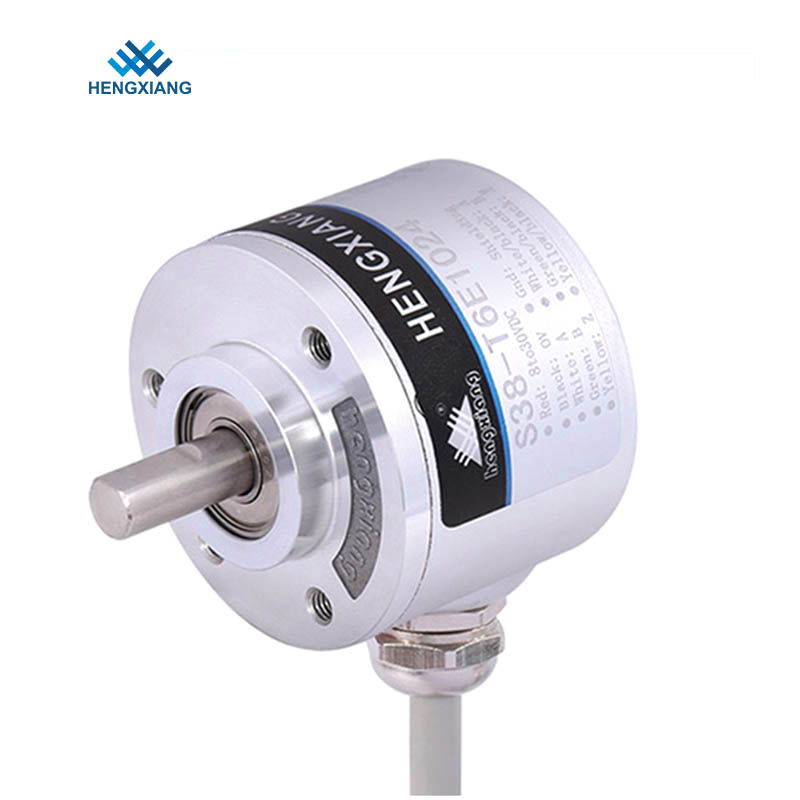
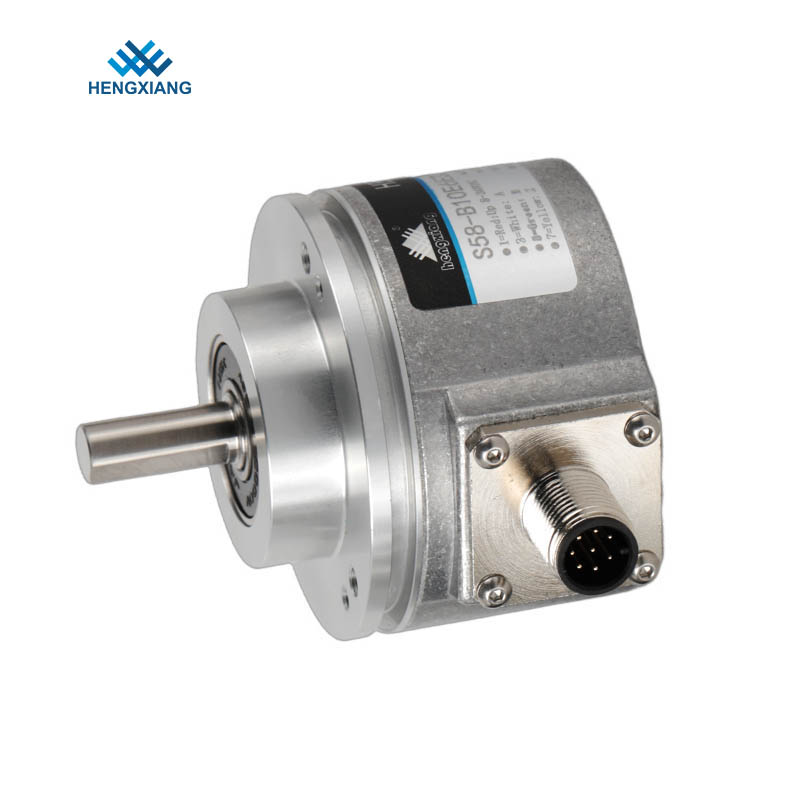
An incremental optical encoder with a hollow shaft is a sophisticated electromechanical device that plays a pivotal role in modern industrial automation and precision motion control. It serves as a high-precision sensor designed to convert the angular position or motion of a rotating shaft into a series of digital pulse signals. By combining advanced optical scanning technology with a mechanically efficient hollow shaft design, this component provides critical feedback regarding speed, direction, and relative position to motor controllers and automated systems.
At its core, the "incremental" and "optical" aspects of the device refer to its internal working principle. Inside the encoder's housing, a light source, typically an LED, shines through a precisely etched glass or metal code disk that is mounted directly onto the rotating shaft. As the shaft turns, the code disk interrupts the light beam, creating a pattern of light and shadow. This pattern is detected by photoreceptors which generate electrical pulses. These pulses are output as two square wave signals, commonly known as Channel A and Channel B, which are 90 degrees out of phase. By analyzing the phase relationship between these two channels, a control system can accurately determine both the speed of rotation and the direction of the movement. Additionally, most incremental encoders provide a third signal called the Z-phase or index pulse, which outputs a single pulse once per revolution to establish a precise reference zero point.
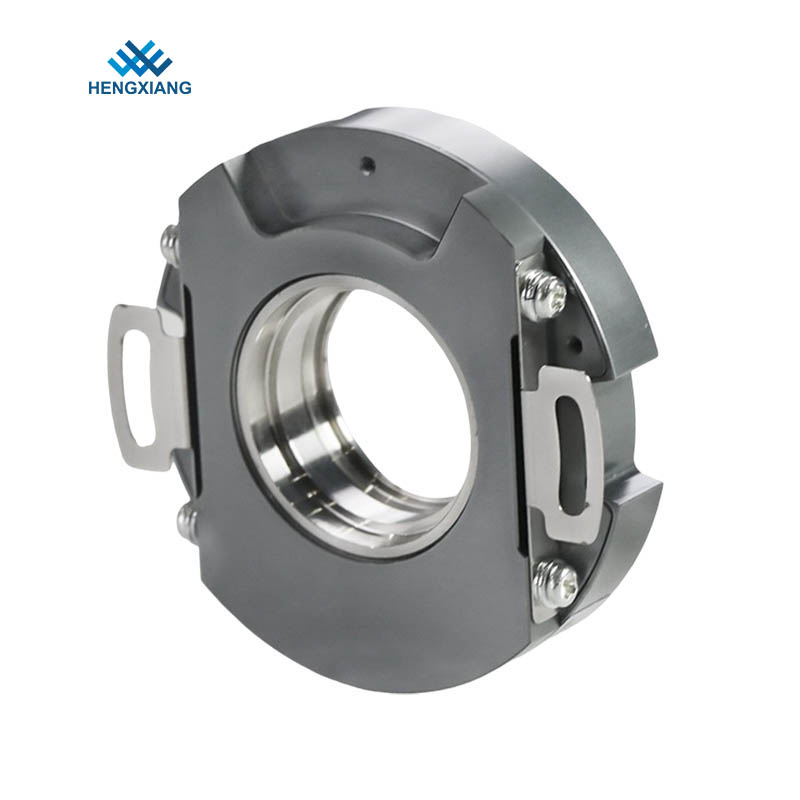
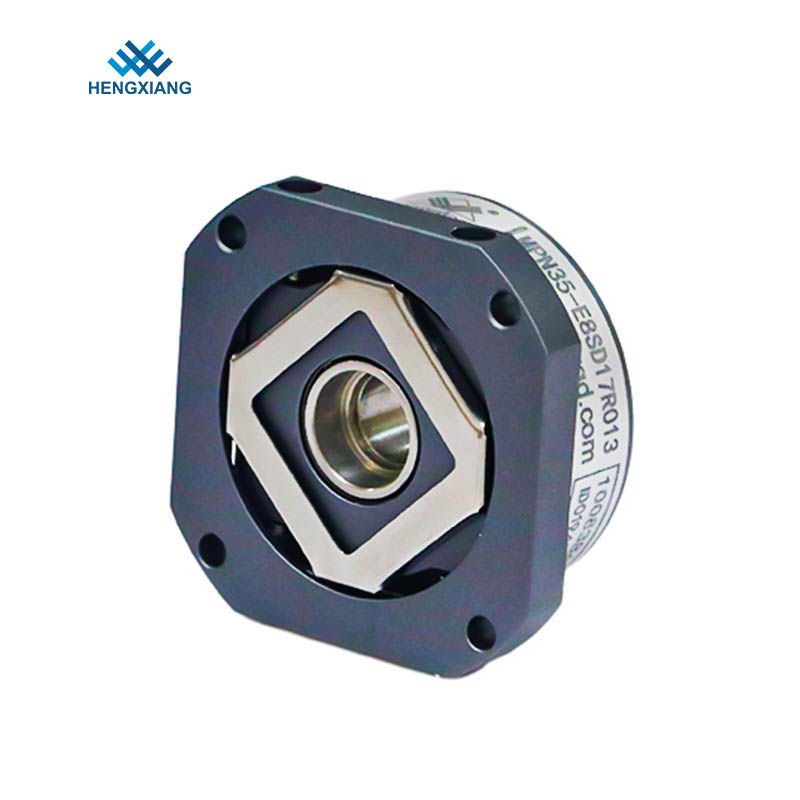
The defining physical characteristic of this device is its hollow shaft design. Unlike traditional solid-shaft encoders that require flexible couplings to connect to a motor, a hollow shaft encoder features a central bore that allows the motor shaft to pass directly through it. The encoder is then secured to the motor shaft using a spring-loaded tether arm or a clamping mechanism. This direct-mount architecture offers significant mechanical advantages. It completely eliminates the need for couplings, which saves valuable installation space, reduces the overall weight of the assembly, and removes potential points of failure such as coupling wear or backlash. Furthermore, this design simplifies the installation process and accommodates minor misalignments between the motor and the stationary encoder body, ensuring smooth operation even at high rotational speeds.
To ensure reliable performance in demanding industrial environments, these encoders are engineered with robust protective features. They typically operate across a wide voltage range, making them compatible with various standard industrial power supplies. More importantly, they are built to withstand electrical anomalies common in factory settings. Integrated anti-interference capabilities protect the delicate optical signals from electromagnetic noise generated by nearby heavy machinery, variable frequency drives, or servo motors. Additionally, the internal circuitry includes reverse polarity protection and short-circuit protection. These safety mechanisms prevent catastrophic damage to the electronics in the event of incorrect wiring or power surges, thereby significantly extending the operational lifespan of the device and reducing maintenance downtime.
Incremental optical encoders with hollow shafts are indispensable components in a vast array of applications. They are extensively used in servo motor feedback systems, robotics, CNC machine tools, conveyor systems, and automated packaging equipment. Their ability to deliver high-resolution feedback with exceptional durability makes them the preferred choice for engineers seeking to optimize the precision and efficiency of motion control systems. Ultimately, this device represents a perfect fusion of optical precision and rugged mechanical design, serving as the silent eyes of countless automated machines around the world.
At its core, the "incremental" and "optical" aspects of the device refer to its internal working principle. Inside the encoder's housing, a light source, typically an LED, shines through a precisely etched glass or metal code disk that is mounted directly onto the rotating shaft. As the shaft turns, the code disk interrupts the light beam, creating a pattern of light and shadow. This pattern is detected by photoreceptors which generate electrical pulses. These pulses are output as two square wave signals, commonly known as Channel A and Channel B, which are 90 degrees out of phase. By analyzing the phase relationship between these two channels, a control system can accurately determine both the speed of rotation and the direction of the movement. Additionally, most incremental encoders provide a third signal called the Z-phase or index pulse, which outputs a single pulse once per revolution to establish a precise reference zero point.
The defining physical characteristic of this device is its hollow shaft design. Unlike traditional solid-shaft encoders that require flexible couplings to connect to a motor, a hollow shaft encoder features a central bore that allows the motor shaft to pass directly through it. The encoder is then secured to the motor shaft using a spring-loaded tether arm or a clamping mechanism. This direct-mount architecture offers significant mechanical advantages. It completely eliminates the need for couplings, which saves valuable installation space, reduces the overall weight of the assembly, and removes potential points of failure such as coupling wear or backlash. Furthermore, this design simplifies the installation process and accommodates minor misalignments between the motor and the stationary encoder body, ensuring smooth operation even at high rotational speeds.
To ensure reliable performance in demanding industrial environments, these encoders are engineered with robust protective features. They typically operate across a wide voltage range, making them compatible with various standard industrial power supplies. More importantly, they are built to withstand electrical anomalies common in factory settings. Integrated anti-interference capabilities protect the delicate optical signals from electromagnetic noise generated by nearby heavy machinery, variable frequency drives, or servo motors. Additionally, the internal circuitry includes reverse polarity protection and short-circuit protection. These safety mechanisms prevent catastrophic damage to the electronics in the event of incorrect wiring or power surges, thereby significantly extending the operational lifespan of the device and reducing maintenance downtime.
Incremental optical encoders with hollow shafts are indispensable components in a vast array of applications. They are extensively used in servo motor feedback systems, robotics, CNC machine tools, conveyor systems, and automated packaging equipment. Their ability to deliver high-resolution feedback with exceptional durability makes them the preferred choice for engineers seeking to optimize the precision and efficiency of motion control systems. Ultimately, this device represents a perfect fusion of optical precision and rugged mechanical design, serving as the silent eyes of countless automated machines around the world.