


How does the parallel Gray code output encoder redefine reliability in industrial position sensing?
Release Time : 2026-07-15
In the vast landscape of modern industrial automation and precision mechanical control, the accuracy of position sensing and the stability of signal transmission directly determine the operational efficiency and safety limits of the entire system. As a standout example of single-turn absolute encoders, the parallel Gray code output encoder delivers indispensable position-sensing solutions for diverse machinery, leveraging unique encoding logic and robust circuit protection designs.
The application of Gray code technology fundamentally ensures the absolute reliability of signal transmission. In traditional binary encoding, numerical increments often involve the simultaneous transition of multiple bits; during high-speed operation or signal interference, this frequently leads to momentary erroneous code values. The parallel Gray code output encoder ingeniously resolves this issue: its core advantage lies in the fact that the code value changes by only a single bit between adjacent mechanical positions. This unique encoding logic eliminates the risks of signal jitter and misinterpretation associated with multi-bit transitions, ensuring that every mechanical position corresponds to a unique and absolutely accurate code. Regardless of the complex electromagnetic environment, the encoder transmits position information in real-time with high fidelity, providing a pristine and trustworthy data foundation for automation control systems.
Regarding electrical performance and circuit protection, the encoder demonstrates the exceptional robustness and versatility expected of industrial-grade equipment. Its circuit design supports a wide operating voltage range, allowing it to easily adapt to the complex and fluctuating power supply conditions found in industrial settings. Whether facing minor voltage fluctuations or power instability under specific operating conditions, it maintains stable operation, significantly broadening the scope of its application. Crucially, it integrates comprehensive circuit protection mechanisms, including reverse polarity and short-circuit protection. Wiring errors or accidental short circuits can occur during installation and maintenance; these built-in safeguards act as a sturdy shield, automatically cutting off or limiting hazards the moment abnormal currents or incorrect wiring arise, thereby effectively preventing damage to core electronic components. This design not only drastically reduces the risk of equipment damage caused by human error but also significantly extends the encoder's service life, resulting in substantial maintenance cost savings for enterprises.
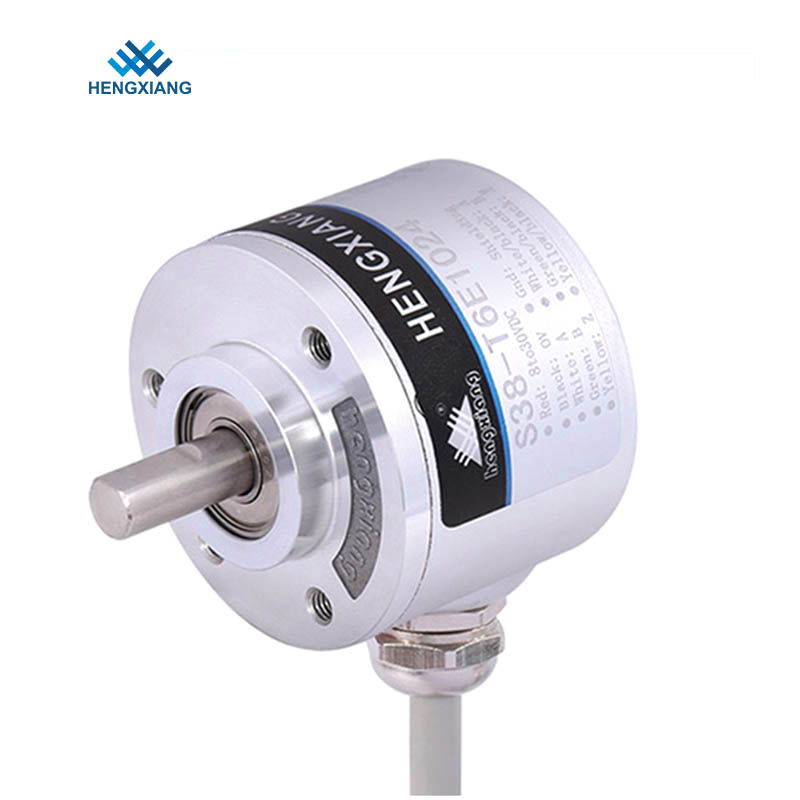
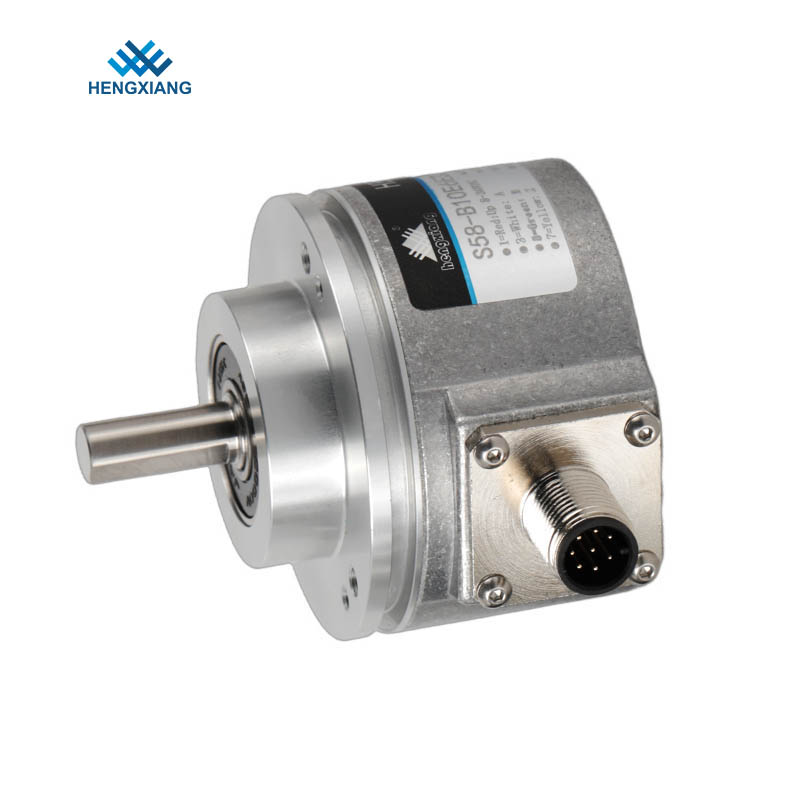
The solid-shaft mechanical design provides a robust physical foundation for the encoder's precise detection capabilities. Characterized by exceptional torsional rigidity and radial load-bearing capacity, the solid shaft integrates seamlessly with various motors, drive shafts, and rotating mechanisms. Even under demanding operating conditions—such as high-speed rotation or heavy mechanical loads—the solid shaft ensures the absolute precision of the relative positioning between the code disk and the photoelectric sensor, thereby eliminating measurement errors caused by shaft deformation or eccentricity. This perfect fusion of mechanical structure and electronic technology enables the encoder to maintain superior repeatability and positional stability during prolonged, high-frequency operation.
The outstanding performance of the parallel Gray code output encoder makes it the preferred choice across numerous high-end industrial sectors. Whether deployed in applications demanding extreme precision—such as CNC machine tools and robotic joints—or in harsh environments like steel metallurgy and port hoisting equipment, it rises to the challenge with wide voltage adaptability, robust interference resistance, and built-in circuit protection. Far more than a mere position-sensing component, it serves as a cornerstone for the safe, efficient, and continuous operation of industrial systems, redefining reliability standards in industrial position sensing through its comprehensive, high-performance advantages.
The application of Gray code technology fundamentally ensures the absolute reliability of signal transmission. In traditional binary encoding, numerical increments often involve the simultaneous transition of multiple bits; during high-speed operation or signal interference, this frequently leads to momentary erroneous code values. The parallel Gray code output encoder ingeniously resolves this issue: its core advantage lies in the fact that the code value changes by only a single bit between adjacent mechanical positions. This unique encoding logic eliminates the risks of signal jitter and misinterpretation associated with multi-bit transitions, ensuring that every mechanical position corresponds to a unique and absolutely accurate code. Regardless of the complex electromagnetic environment, the encoder transmits position information in real-time with high fidelity, providing a pristine and trustworthy data foundation for automation control systems.
Regarding electrical performance and circuit protection, the encoder demonstrates the exceptional robustness and versatility expected of industrial-grade equipment. Its circuit design supports a wide operating voltage range, allowing it to easily adapt to the complex and fluctuating power supply conditions found in industrial settings. Whether facing minor voltage fluctuations or power instability under specific operating conditions, it maintains stable operation, significantly broadening the scope of its application. Crucially, it integrates comprehensive circuit protection mechanisms, including reverse polarity and short-circuit protection. Wiring errors or accidental short circuits can occur during installation and maintenance; these built-in safeguards act as a sturdy shield, automatically cutting off or limiting hazards the moment abnormal currents or incorrect wiring arise, thereby effectively preventing damage to core electronic components. This design not only drastically reduces the risk of equipment damage caused by human error but also significantly extends the encoder's service life, resulting in substantial maintenance cost savings for enterprises.
The solid-shaft mechanical design provides a robust physical foundation for the encoder's precise detection capabilities. Characterized by exceptional torsional rigidity and radial load-bearing capacity, the solid shaft integrates seamlessly with various motors, drive shafts, and rotating mechanisms. Even under demanding operating conditions—such as high-speed rotation or heavy mechanical loads—the solid shaft ensures the absolute precision of the relative positioning between the code disk and the photoelectric sensor, thereby eliminating measurement errors caused by shaft deformation or eccentricity. This perfect fusion of mechanical structure and electronic technology enables the encoder to maintain superior repeatability and positional stability during prolonged, high-frequency operation.
The outstanding performance of the parallel Gray code output encoder makes it the preferred choice across numerous high-end industrial sectors. Whether deployed in applications demanding extreme precision—such as CNC machine tools and robotic joints—or in harsh environments like steel metallurgy and port hoisting equipment, it rises to the challenge with wide voltage adaptability, robust interference resistance, and built-in circuit protection. Far more than a mere position-sensing component, it serves as a cornerstone for the safe, efficient, and continuous operation of industrial systems, redefining reliability standards in industrial position sensing through its comprehensive, high-performance advantages.