


How can an absolute encoder achieve accurate and continuous industrial position feedback with high reliability?
Release Time : 2025-11-07
In modern high-end equipment manufacturing, precision automation, and energy control systems, acquiring position information requires not only high precision but also strong power-off memory, anti-interference capabilities, and long-term operational stability. Absolute encoders, especially multi-turn solid-state products with a solid shaft structure, have become indispensable core sensing components in harsh industrial environments due to their battery-free operation, unique full-stroke encoding output, and robust mechanical design. Their professional value lies not only in their technical parameters but also in transforming complex position measurement needs into reliable, continuous, and maintenance-free engineering solutions.
The core advantage of an absolute encoder lies in its "absolute position" recognition capability. Unlike incremental encoders, it can output a unique digital code of the current position at any given time. Even after a power outage and restart, it can immediately provide accurate position information without requiring a zero-return operation. This feature is crucial for large equipment such as wind turbine pitch control systems, port cranes, or CNC rotary tables, avoiding downtime risks and safety concerns caused by lost reference points. The multi-turn function further expands the measurement range. Through internal mechanical gear sets or non-contact magnetic/photoelectric counting mechanisms, it can record the number of complete rotations exceeding 360° of the spindle, achieving ultra-long stroke positioning with hundreds of thousands or even millions of pulse equivalents, meeting the needs of high-dynamic, large-stroke applications.
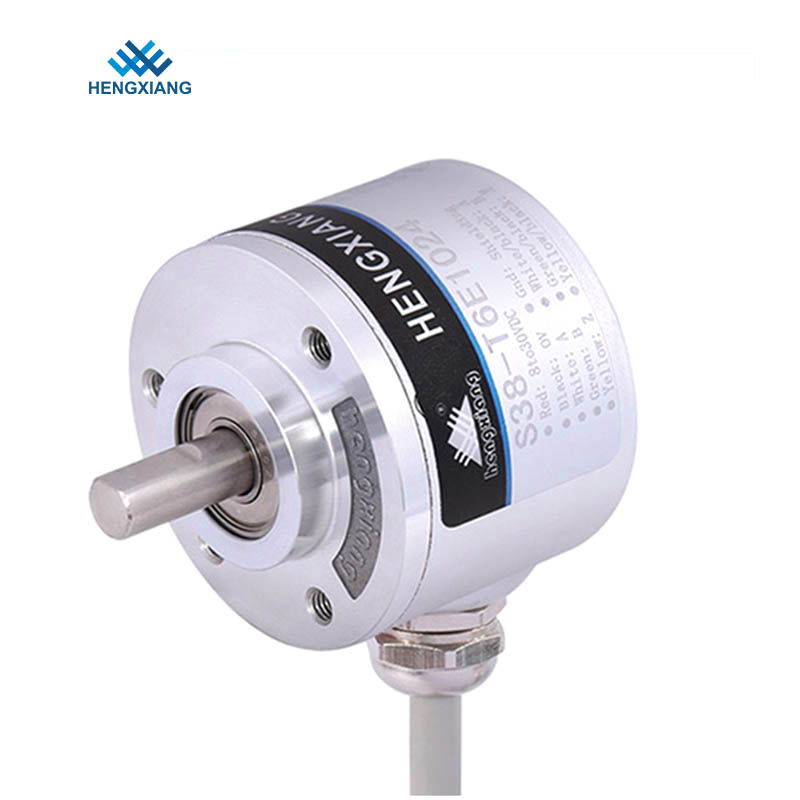
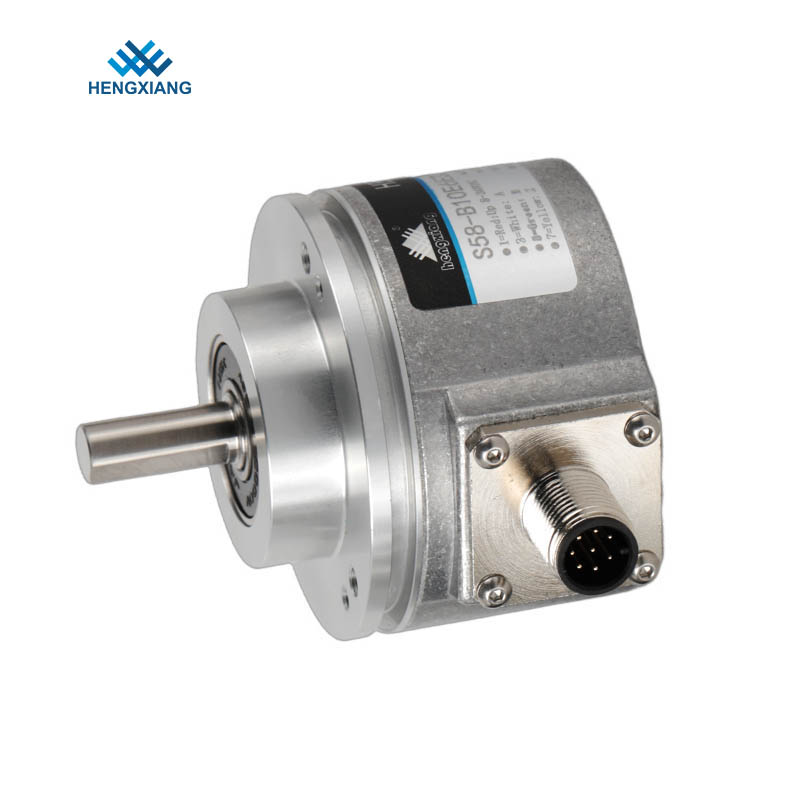
The solid shaft structure enhances its applicability under heavy-duty conditions. Compared to hollow or blind-hole shafts, solid shafts have higher torsional stiffness and radial load capacity, effectively resisting external vibrations, impacts, and additional stresses from misaligned installations. The shaft body is typically made of tempered alloy steel with a hardened surface treatment, ensuring geometric accuracy and rotational stability under frequent starts and stops or high-inertia loads. Simultaneously, the integration of the solid shaft and bearing system undergoes precise dynamic balancing calibration, significantly reducing vibration and noise during high-speed operation and extending the overall lifespan of the encoder.
Multi-turn solid-state technology is the culmination of the professionalism of this type of encoder. "Solid-state" means abandoning the traditional electronic turn counting method that relies on battery or capacitor energy storage, and instead using a purely mechanical or passive magnetic coupling structure to achieve turn count memory. For example, by using precision reduction gears to drive the secondary encoder disk, or by utilizing the residual magnetism of hysteresis materials to record rotation history, the risks of battery aging, high-temperature failure, or data loss are fundamentally eliminated. This design not only improves environmental adaptability (operating temperature range from -40°C to +105°C) but also meets the stringent requirements of intrinsic safety and long-term maintenance-free operation in industrial settings.
Protective performance also demonstrates its engineering depth. High-grade IP67 or IP69K protective housings effectively resist dust, high-pressure water jets, and corrosive media intrusion; double-shielded cables and differential signal outputs (such as SSI, CANopen, BiSS, etc.) ensure the integrity of data transmission in environments with strong electromagnetic interference; wide voltage input and overload protection circuitry enhance tolerance to power fluctuations. All these details combine to create a sensing unit that can operate continuously and stably in harsh environments such as metallurgy, mining, shipbuilding, or rail transportation.
Ultimately, the value of the absolute solid-shaft multi-turn solid encoder lies in its transformation of position sensing from a "variable requiring calibration" to a "constant that is always reliable." In unmanned smart factories, in energy facilities operating in extreme climates, and on high-speed precision machine tools, it silently outputs precise positional signals, providing a solid basis for control system decisions. This silent yet accurate reliability is the best interpretation of the professional spirit of high-end industrial sensing technology.
The core advantage of an absolute encoder lies in its "absolute position" recognition capability. Unlike incremental encoders, it can output a unique digital code of the current position at any given time. Even after a power outage and restart, it can immediately provide accurate position information without requiring a zero-return operation. This feature is crucial for large equipment such as wind turbine pitch control systems, port cranes, or CNC rotary tables, avoiding downtime risks and safety concerns caused by lost reference points. The multi-turn function further expands the measurement range. Through internal mechanical gear sets or non-contact magnetic/photoelectric counting mechanisms, it can record the number of complete rotations exceeding 360° of the spindle, achieving ultra-long stroke positioning with hundreds of thousands or even millions of pulse equivalents, meeting the needs of high-dynamic, large-stroke applications.
The solid shaft structure enhances its applicability under heavy-duty conditions. Compared to hollow or blind-hole shafts, solid shafts have higher torsional stiffness and radial load capacity, effectively resisting external vibrations, impacts, and additional stresses from misaligned installations. The shaft body is typically made of tempered alloy steel with a hardened surface treatment, ensuring geometric accuracy and rotational stability under frequent starts and stops or high-inertia loads. Simultaneously, the integration of the solid shaft and bearing system undergoes precise dynamic balancing calibration, significantly reducing vibration and noise during high-speed operation and extending the overall lifespan of the encoder.
Multi-turn solid-state technology is the culmination of the professionalism of this type of encoder. "Solid-state" means abandoning the traditional electronic turn counting method that relies on battery or capacitor energy storage, and instead using a purely mechanical or passive magnetic coupling structure to achieve turn count memory. For example, by using precision reduction gears to drive the secondary encoder disk, or by utilizing the residual magnetism of hysteresis materials to record rotation history, the risks of battery aging, high-temperature failure, or data loss are fundamentally eliminated. This design not only improves environmental adaptability (operating temperature range from -40°C to +105°C) but also meets the stringent requirements of intrinsic safety and long-term maintenance-free operation in industrial settings.
Protective performance also demonstrates its engineering depth. High-grade IP67 or IP69K protective housings effectively resist dust, high-pressure water jets, and corrosive media intrusion; double-shielded cables and differential signal outputs (such as SSI, CANopen, BiSS, etc.) ensure the integrity of data transmission in environments with strong electromagnetic interference; wide voltage input and overload protection circuitry enhance tolerance to power fluctuations. All these details combine to create a sensing unit that can operate continuously and stably in harsh environments such as metallurgy, mining, shipbuilding, or rail transportation.
Ultimately, the value of the absolute solid-shaft multi-turn solid encoder lies in its transformation of position sensing from a "variable requiring calibration" to a "constant that is always reliable." In unmanned smart factories, in energy facilities operating in extreme climates, and on high-speed precision machine tools, it silently outputs precise positional signals, providing a solid basis for control system decisions. This silent yet accurate reliability is the best interpretation of the professional spirit of high-end industrial sensing technology.