


Can a single-turn solid encoder still output a clean position signal near a frequency converter or motor?
Release Time : 2025-12-19
In modern industrial automation systems, the accuracy of position feedback directly affects the precision and stability of equipment operation. As a key sensing element, encoders are widely used in high-precision control scenarios such as servo motors, robots, and CNC machine tools. Due to its non-contact, high reliability, and strong anti-interference capabilities, the single-turn solid encoder is gradually becoming the preferred solution in harsh electromagnetic environments.
1. Advantages of a Single-Turn Solid Encoder
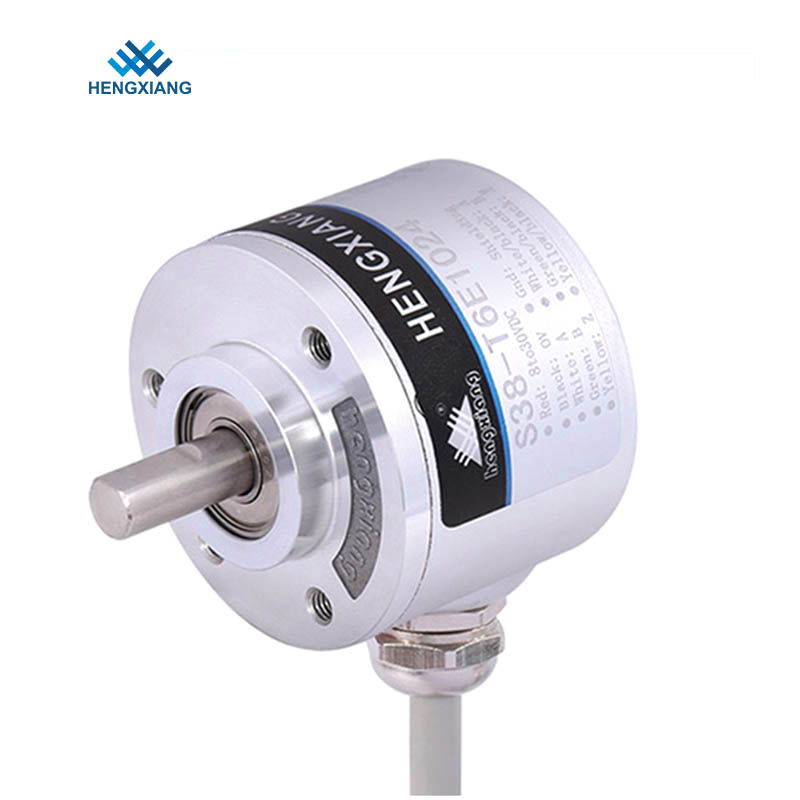
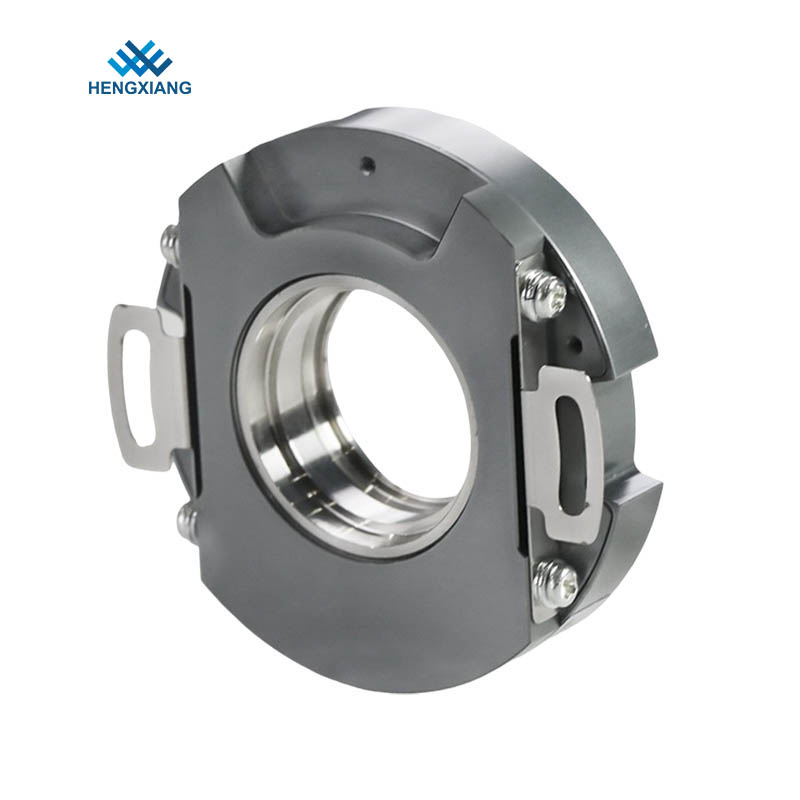
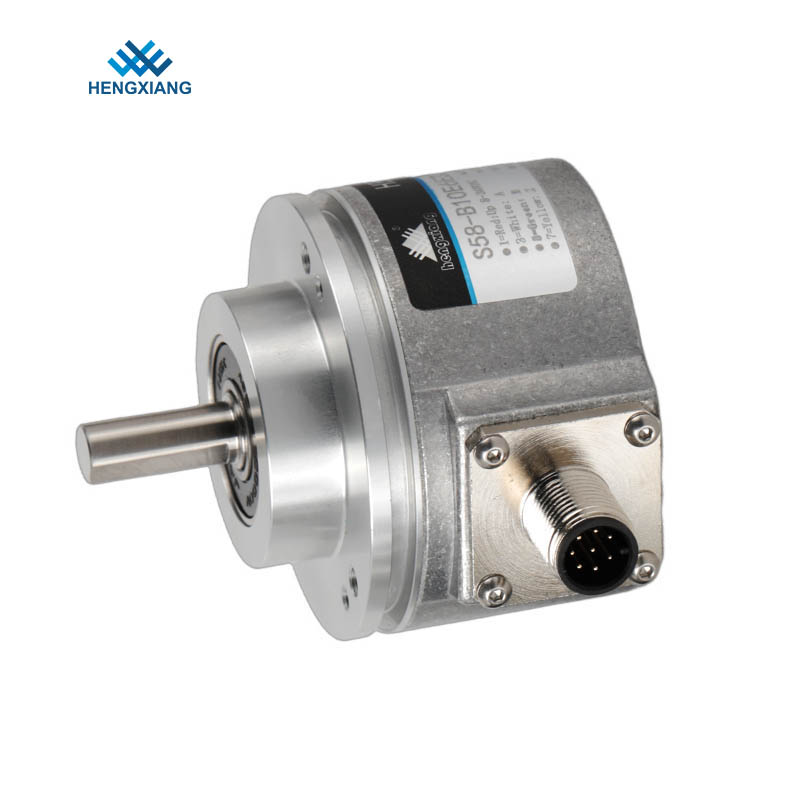
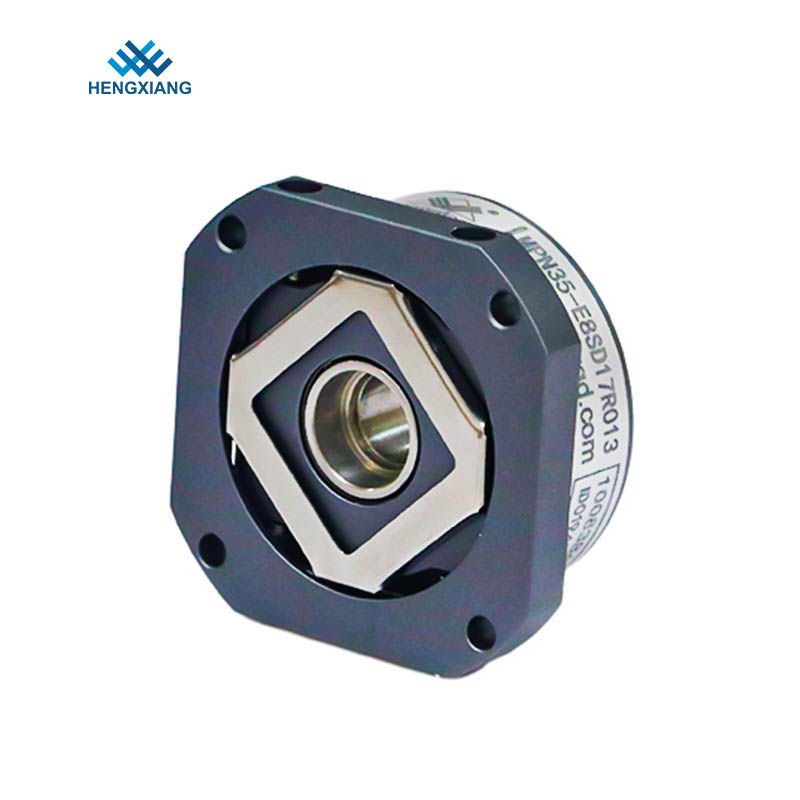
A single-turn solid encoder is a sensor that measures angles based on magnetoresistive, Hall effect, or photoelectric technology. Its "single-turn" characteristic means it can only record the absolute position within one revolution and does not have multi-turn counting capabilities. The "solid-state" aspect emphasizes its absence of mechanical brushes and optical code disks, typically employing a fully electronic structure, resulting in higher durability and vibration resistance. Compared to traditional photoelectric encoders, solid-state encoders do not require precisely aligned optical components and are more adaptable to harsh conditions such as external dust, oil, and vibration. More importantly, its signal processing circuitry is often integrated within the chip, which can improve noise immunity through digital filtering and differential transmission.
2. Electromagnetic Interference Challenges from Inverters and Motors
Inverters control motor speed via high-frequency PWM, with switching frequencies typically ranging from several kilohertz to tens of kilohertz, generating strong electromagnetic radiation and common-mode noise. Simultaneously, transient voltage spikes and ground potential drift occur during motor winding commutation. If these interferences couple into the encoder signal lines, they can easily lead to position signal distortion, jumps, or even communication interruptions. Traditional photoelectric encoders, relying on analog photoelectric signals, are sensitive to power fluctuations and electromagnetic fields; while early magnetic encoders, if insufficiently shielded, may also exhibit reading deviations due to magnetic field crosstalk. Therefore, when installed near inverters or motors, the encoder's anti-interference capability becomes a critical indicator.
3. Anti-interference Design of Single-Turn Solid Encoders
Single-turn solid encoders are designed with EMC requirements of industrial environments in mind. First, its core sensing element is inherently insensitive to electric fields, primarily responding to changes in magnetic fields in a specific direction, thus possessing a natural degree of resistance to electrical interference. Second, most products employ differential signal output or digital communication interfaces, effectively suppressing common-mode noise. Furthermore, high-quality encoders typically feature metal housings with proper grounding, optimized internal PCB layouts, and protective circuitry at the power input, including TVS diodes and filter capacitors, further enhancing system robustness.
In summary, thanks to its solid-state structure, digital signal processing, and robust electromagnetic compatibility design, the single-turn solid encoder is fully capable of outputting clean and accurate position signals even in highly interference environments near inverters or motors. This not only enhances the flexibility of system integration but also provides a solid foundation for high-reliability industrial control.
1. Advantages of a Single-Turn Solid Encoder
A single-turn solid encoder is a sensor that measures angles based on magnetoresistive, Hall effect, or photoelectric technology. Its "single-turn" characteristic means it can only record the absolute position within one revolution and does not have multi-turn counting capabilities. The "solid-state" aspect emphasizes its absence of mechanical brushes and optical code disks, typically employing a fully electronic structure, resulting in higher durability and vibration resistance. Compared to traditional photoelectric encoders, solid-state encoders do not require precisely aligned optical components and are more adaptable to harsh conditions such as external dust, oil, and vibration. More importantly, its signal processing circuitry is often integrated within the chip, which can improve noise immunity through digital filtering and differential transmission.
2. Electromagnetic Interference Challenges from Inverters and Motors
Inverters control motor speed via high-frequency PWM, with switching frequencies typically ranging from several kilohertz to tens of kilohertz, generating strong electromagnetic radiation and common-mode noise. Simultaneously, transient voltage spikes and ground potential drift occur during motor winding commutation. If these interferences couple into the encoder signal lines, they can easily lead to position signal distortion, jumps, or even communication interruptions. Traditional photoelectric encoders, relying on analog photoelectric signals, are sensitive to power fluctuations and electromagnetic fields; while early magnetic encoders, if insufficiently shielded, may also exhibit reading deviations due to magnetic field crosstalk. Therefore, when installed near inverters or motors, the encoder's anti-interference capability becomes a critical indicator.
3. Anti-interference Design of Single-Turn Solid Encoders
Single-turn solid encoders are designed with EMC requirements of industrial environments in mind. First, its core sensing element is inherently insensitive to electric fields, primarily responding to changes in magnetic fields in a specific direction, thus possessing a natural degree of resistance to electrical interference. Second, most products employ differential signal output or digital communication interfaces, effectively suppressing common-mode noise. Furthermore, high-quality encoders typically feature metal housings with proper grounding, optimized internal PCB layouts, and protective circuitry at the power input, including TVS diodes and filter capacitors, further enhancing system robustness.
In summary, thanks to its solid-state structure, digital signal processing, and robust electromagnetic compatibility design, the single-turn solid encoder is fully capable of outputting clean and accurate position signals even in highly interference environments near inverters or motors. This not only enhances the flexibility of system integration but also provides a solid foundation for high-reliability industrial control.