


How to ensure both measurement accuracy and ease of installation in an incremental solid shaft encoder with a compact design?
Release Time : 2026-03-26
In the field of industrial automation, incremental solid shaft encoders are widely used in CNC machine tools, motor drives, and various precision equipment due to their compact structure, moderate cost, and wide applicability. However, miniaturization often means limited internal space, which places higher demands on both measurement accuracy and ease of installation. Achieving high-precision output within a limited space while also considering installation efficiency has become a key challenge in the design of this type of encoder.
1. Core Detection Structure Optimization: High Precision in a Small Size
In terms of measurement accuracy, the encoder mainly relies on an internal photoelectric or magnetoelectric detection system. By employing a high-resolution code disk and precision engraving technology, stable and delicate pulse output can be achieved even in a small-diameter structure. Simultaneously, optimizing the sensor layout to ensure precise alignment of transmitting and receiving elements helps reduce signal errors. Furthermore, by increasing the integration of signal processing circuitry and centralizing the amplification, shaping, and anti-interference modules, not only is space saved, but signal quality is also improved, thus ensuring that measurement accuracy does not decrease due to miniaturization.
2. Shaft System and Mechanical Structure Design: Ensuring Stability and Coaxiality
Solid shaft structures have a natural advantage in compact designs. High-precision machining and strict coaxiality control ensure shaft stability during rotation, reducing the impact of runout on signal acquisition. Simultaneously, the use of high-quality bearings and a reasonable preload design ensures the encoder maintains low vibration and low noise even at high speeds. This stable mechanical foundation is a crucial prerequisite for achieving high-precision measurement.
3. Standardized Installation Interfaces: Improving Assembly Efficiency
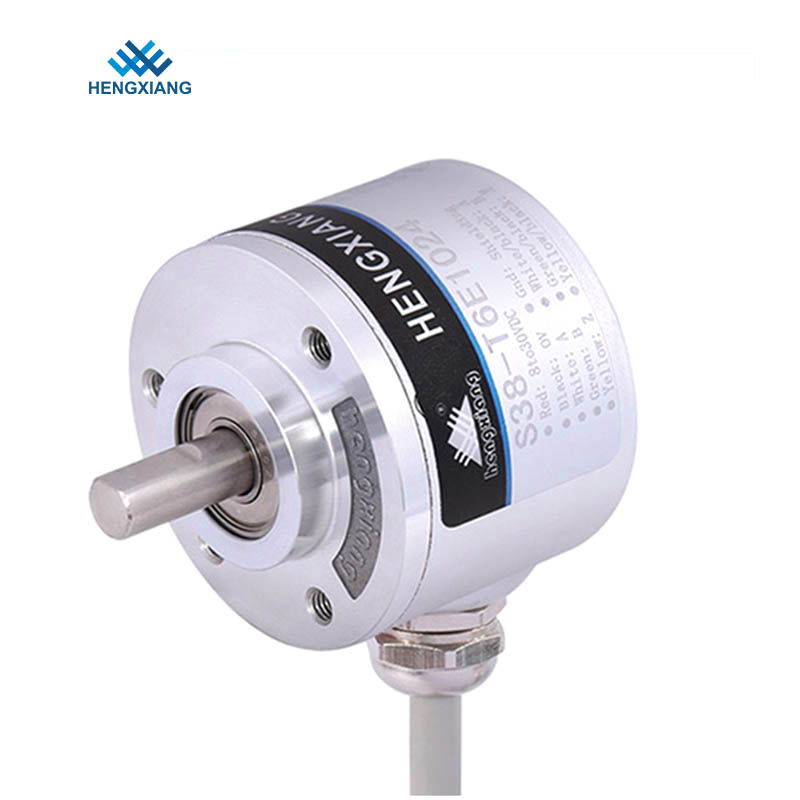
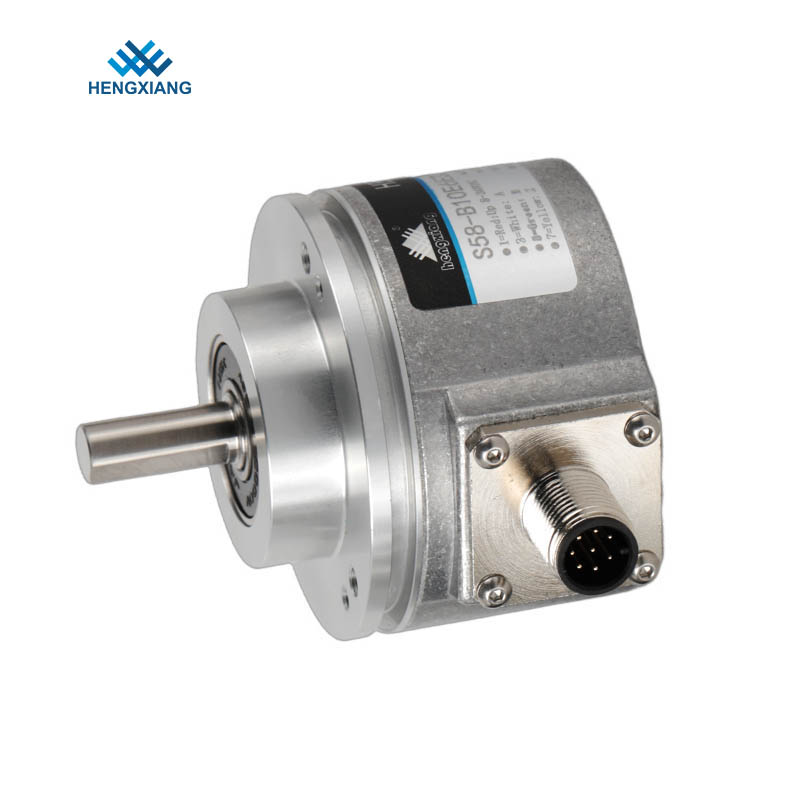
Standardized design plays a decisive role in ease of installation. By standardizing shaft diameter, keyway specifications, and flange mounting hole positions, the encoder can be quickly matched with various devices without additional machining or complex adjustments. Furthermore, the use of compact flanges or clamping structures simplifies the installation process, reducing space requirements. Some designs also incorporate flexible couplings or flexible connections that automatically compensate for slight installation deviations, reducing reliance on alignment accuracy.
4. Electrical Connection and Wiring Optimization
Besides mechanical installation, electrical connections also affect ease of use. Compact encoders typically employ integrated interfaces or pre-fabricated cable designs, reducing on-site wiring workload. Simultaneously, optimized interface locations and cable exit directions ensure more rational wiring, avoiding interference or bending issues in confined spaces. This not only improves installation efficiency but also reduces the risk of malfunctions caused by improper wiring.
5. Interference Resistance and Environmental Adaptability
In miniaturized structures, the reduced spacing between components makes them more susceptible to electromagnetic interference and environmental factors. Therefore, by adding shielding layers, optimizing grounding design, and employing anti-interference circuitry, a stable signal environment can be constructed within limited spaces. Furthermore, the use of sealed structures and durable housings allows the encoder to withstand complex operating conditions such as dust and vibration, reducing accuracy fluctuations caused by environmental factors.
Overall, the incremental solid shaft encoder, while maintaining a compact structure, achieves a balance between measurement accuracy and ease of installation through the synergy of optimized detection systems, mechanical precision control, standardized installation design, and electrical and environmental adaptability. This integrated and systematic design approach makes it highly efficient and reliable in modern industrial automation.
1. Core Detection Structure Optimization: High Precision in a Small Size
In terms of measurement accuracy, the encoder mainly relies on an internal photoelectric or magnetoelectric detection system. By employing a high-resolution code disk and precision engraving technology, stable and delicate pulse output can be achieved even in a small-diameter structure. Simultaneously, optimizing the sensor layout to ensure precise alignment of transmitting and receiving elements helps reduce signal errors. Furthermore, by increasing the integration of signal processing circuitry and centralizing the amplification, shaping, and anti-interference modules, not only is space saved, but signal quality is also improved, thus ensuring that measurement accuracy does not decrease due to miniaturization.
2. Shaft System and Mechanical Structure Design: Ensuring Stability and Coaxiality
Solid shaft structures have a natural advantage in compact designs. High-precision machining and strict coaxiality control ensure shaft stability during rotation, reducing the impact of runout on signal acquisition. Simultaneously, the use of high-quality bearings and a reasonable preload design ensures the encoder maintains low vibration and low noise even at high speeds. This stable mechanical foundation is a crucial prerequisite for achieving high-precision measurement.
3. Standardized Installation Interfaces: Improving Assembly Efficiency
Standardized design plays a decisive role in ease of installation. By standardizing shaft diameter, keyway specifications, and flange mounting hole positions, the encoder can be quickly matched with various devices without additional machining or complex adjustments. Furthermore, the use of compact flanges or clamping structures simplifies the installation process, reducing space requirements. Some designs also incorporate flexible couplings or flexible connections that automatically compensate for slight installation deviations, reducing reliance on alignment accuracy.
4. Electrical Connection and Wiring Optimization
Besides mechanical installation, electrical connections also affect ease of use. Compact encoders typically employ integrated interfaces or pre-fabricated cable designs, reducing on-site wiring workload. Simultaneously, optimized interface locations and cable exit directions ensure more rational wiring, avoiding interference or bending issues in confined spaces. This not only improves installation efficiency but also reduces the risk of malfunctions caused by improper wiring.
5. Interference Resistance and Environmental Adaptability
In miniaturized structures, the reduced spacing between components makes them more susceptible to electromagnetic interference and environmental factors. Therefore, by adding shielding layers, optimizing grounding design, and employing anti-interference circuitry, a stable signal environment can be constructed within limited spaces. Furthermore, the use of sealed structures and durable housings allows the encoder to withstand complex operating conditions such as dust and vibration, reducing accuracy fluctuations caused by environmental factors.
Overall, the incremental solid shaft encoder, while maintaining a compact structure, achieves a balance between measurement accuracy and ease of installation through the synergy of optimized detection systems, mechanical precision control, standardized installation design, and electrical and environmental adaptability. This integrated and systematic design approach makes it highly efficient and reliable in modern industrial automation.