


How does an incremental optical encoder become the intelligent eye for sensing motion and controlling speed in industrial automation?
Release Time : 2026-03-16
In the grand symphony of modern industrial automation, the operation of every motor, the movement of every conveyor belt, and the swinging of every robotic arm require a pair of keen eyes to capture their motion in real time. The incremental solid shaft photoelectric encoder is precisely this tireless intelligent eye. Despite its small size, it contains precise optical principles and superior electronic processing technology, converting the continuous rotation of the mechanical world into clearly discernible pulse signals in the digital world. This provides indispensable speed, direction, and position feedback for control systems, making it a core sensing element driving the efficient operation of intelligent manufacturing.
The core charm of the incremental optical encoder lies in its unique signal generation mechanism. When the solid shaft rotates synchronously with the motor or load, the high-precision grating disk inside rotates accordingly. Light emitted from the light source passes through the fine slits engraved on the grating disk and is captured by a photoelectric receiver on the other side. As the grating rotates, the light is periodically blocked and passed through, thus generating a series of regular electrical pulse signals. The number of pulses is proportional to the rotation angle, while the pulse frequency directly reflects the rotation speed. By counting these pulses, the control system can accurately calculate the shaft's angular displacement and real-time rotational speed. This incremental measurement method means it records the change relative to the previous moment, rather than the absolute position, but its extremely high resolution and fast response make it irreplaceable in applications requiring high-speed dynamic response.
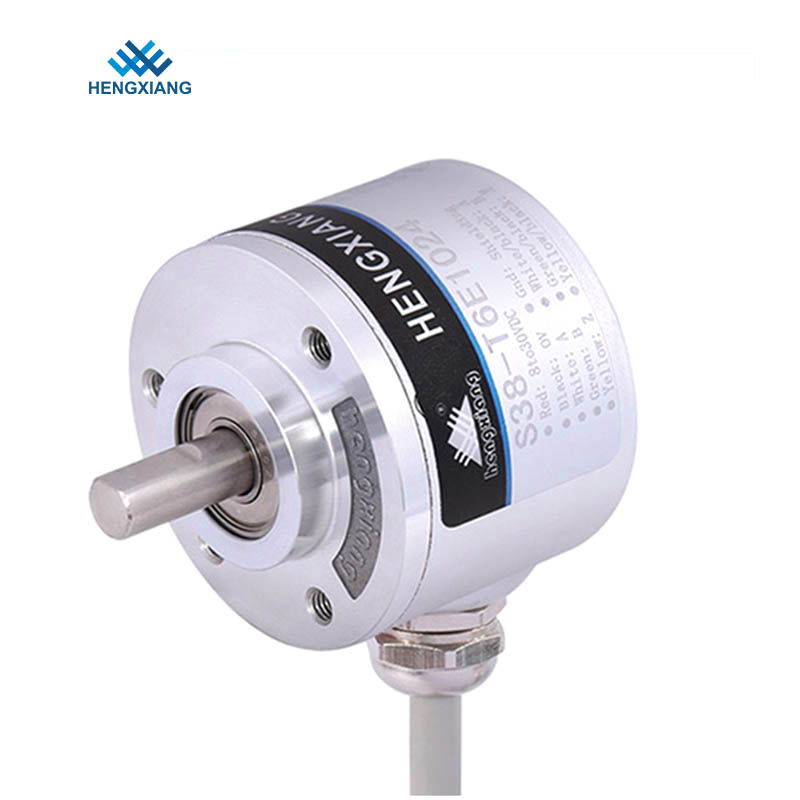
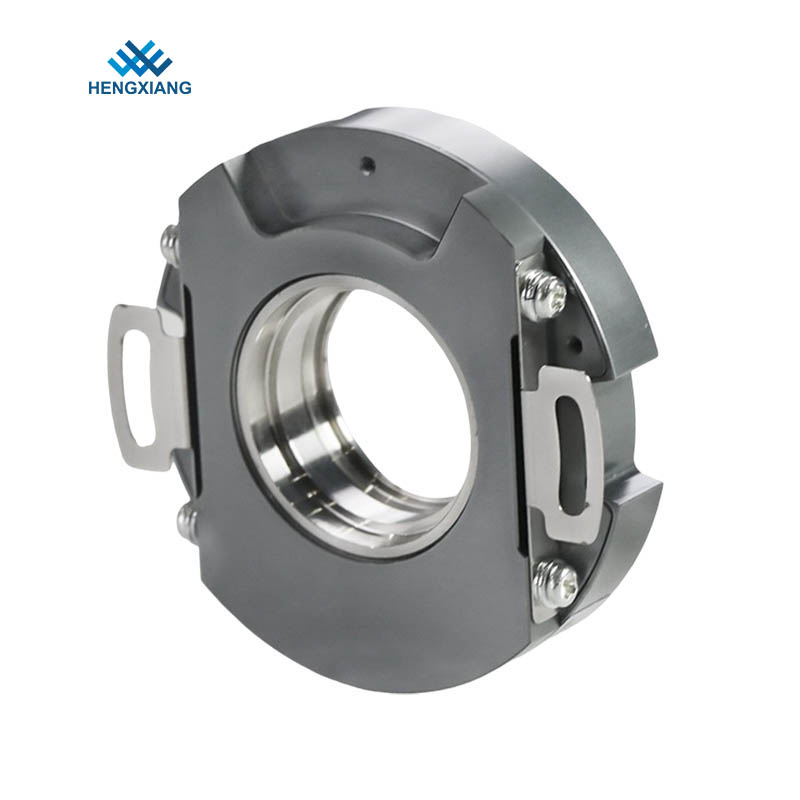
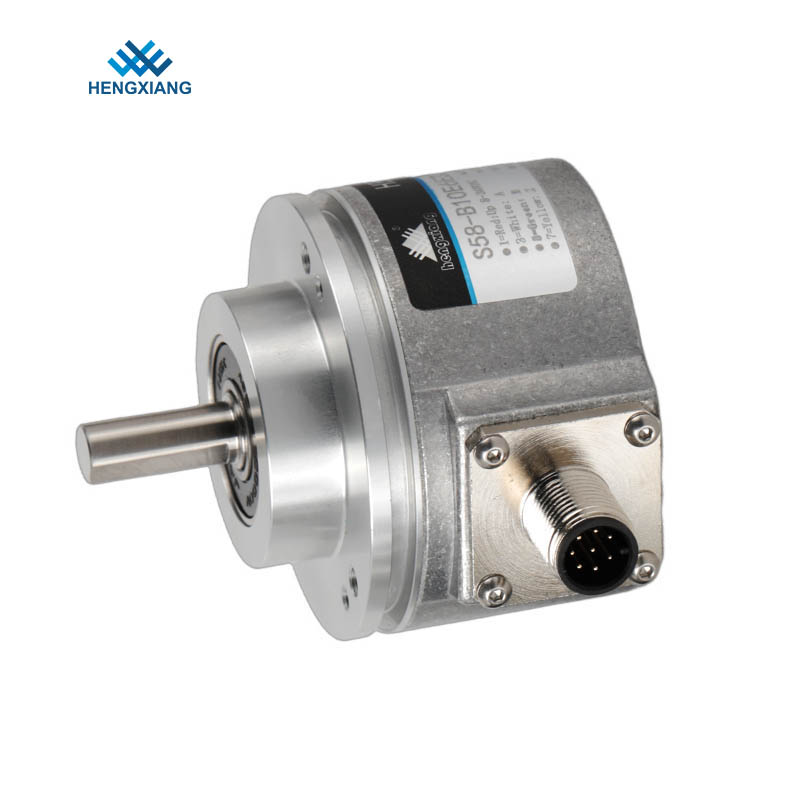
The solid shaft design gives the incremental optical encoder excellent mechanical adaptability and ease of installation. Unlike hollow shaft encoders, the incremental optical encoder has an independent rotating shaft that can be rigidly connected to the drive shaft of the measured equipment via a coupling. This connection method can withstand large radial and axial loads, effectively resisting vibrations and shocks generated during mechanical operation, ensuring long-term stable operation in harsh industrial environments. The solid shaft design also simplifies the installation process; no complex clamping devices are required, only standard keyways or set screws are needed for secure fixing, greatly reducing maintenance costs and downtime. Whether in high-temperature metallurgical workshops, humid water treatment plants, or oil-slick machining centers, this robust structure ensures the purity and reliability of signals.
In diverse industrial applications, incremental optical encoders play a crucial role. In CNC machine tools, they monitor spindle speed and feed rate in real time, ensuring precise control of cutting parameters for high-precision parts. In elevator systems, they accurately calculate the car's speed and position, working with frequency converters to achieve smooth starts and stops, ensuring passenger comfort and safety. In packaging machinery and printing equipment, they synchronously track the material transport length, ensuring accurate registration and neat cutting. Even at robot joints, they can quickly provide feedback on joint angular velocity, assisting controllers in complex trajectory planning and motion coordination. Every pulse is a precise interpretation of the motion state, guiding the machinery to make the most appropriate response.
Technological advancements continuously push the boundaries of incremental encoder performance. Modern products employ more advanced optical engraving technology, achieving single-turn resolutions of tens or even hundreds of thousands of pulses, significantly improving measurement accuracy. The application of differential signal output technology effectively suppresses electromagnetic interference during long-distance transmission, ensuring signal integrity in complex electrical environments. Furthermore, the modular design and intelligent diagnostic functions enable the encoder not only to provide data but also to monitor its own health status and provide early warnings of potential faults, further enhancing system reliability.
From microscopic photoelectric conversion to macroscopic motion control, the incremental optical encoder, with its precise counting capabilities and robust mechanical structure, bridges the physical and digital worlds. It silently observes every rotation, transforming intangible motion into tangible data, empowering countless automated devices and making industrial production more intelligent, efficient, and safe. In the future wave of Industry 4.0, with the deep integration of sensor technology and the Internet of Things, this small encoder will continue to evolve, using its more acute perception to safeguard every precise movement of human creation, becoming a solid foundation for driving the continuous advancement of social productivity.
The core charm of the incremental optical encoder lies in its unique signal generation mechanism. When the solid shaft rotates synchronously with the motor or load, the high-precision grating disk inside rotates accordingly. Light emitted from the light source passes through the fine slits engraved on the grating disk and is captured by a photoelectric receiver on the other side. As the grating rotates, the light is periodically blocked and passed through, thus generating a series of regular electrical pulse signals. The number of pulses is proportional to the rotation angle, while the pulse frequency directly reflects the rotation speed. By counting these pulses, the control system can accurately calculate the shaft's angular displacement and real-time rotational speed. This incremental measurement method means it records the change relative to the previous moment, rather than the absolute position, but its extremely high resolution and fast response make it irreplaceable in applications requiring high-speed dynamic response.
The solid shaft design gives the incremental optical encoder excellent mechanical adaptability and ease of installation. Unlike hollow shaft encoders, the incremental optical encoder has an independent rotating shaft that can be rigidly connected to the drive shaft of the measured equipment via a coupling. This connection method can withstand large radial and axial loads, effectively resisting vibrations and shocks generated during mechanical operation, ensuring long-term stable operation in harsh industrial environments. The solid shaft design also simplifies the installation process; no complex clamping devices are required, only standard keyways or set screws are needed for secure fixing, greatly reducing maintenance costs and downtime. Whether in high-temperature metallurgical workshops, humid water treatment plants, or oil-slick machining centers, this robust structure ensures the purity and reliability of signals.
In diverse industrial applications, incremental optical encoders play a crucial role. In CNC machine tools, they monitor spindle speed and feed rate in real time, ensuring precise control of cutting parameters for high-precision parts. In elevator systems, they accurately calculate the car's speed and position, working with frequency converters to achieve smooth starts and stops, ensuring passenger comfort and safety. In packaging machinery and printing equipment, they synchronously track the material transport length, ensuring accurate registration and neat cutting. Even at robot joints, they can quickly provide feedback on joint angular velocity, assisting controllers in complex trajectory planning and motion coordination. Every pulse is a precise interpretation of the motion state, guiding the machinery to make the most appropriate response.
Technological advancements continuously push the boundaries of incremental encoder performance. Modern products employ more advanced optical engraving technology, achieving single-turn resolutions of tens or even hundreds of thousands of pulses, significantly improving measurement accuracy. The application of differential signal output technology effectively suppresses electromagnetic interference during long-distance transmission, ensuring signal integrity in complex electrical environments. Furthermore, the modular design and intelligent diagnostic functions enable the encoder not only to provide data but also to monitor its own health status and provide early warnings of potential faults, further enhancing system reliability.
From microscopic photoelectric conversion to macroscopic motion control, the incremental optical encoder, with its precise counting capabilities and robust mechanical structure, bridges the physical and digital worlds. It silently observes every rotation, transforming intangible motion into tangible data, empowering countless automated devices and making industrial production more intelligent, efficient, and safe. In the future wave of Industry 4.0, with the deep integration of sensor technology and the Internet of Things, this small encoder will continue to evolve, using its more acute perception to safeguard every precise movement of human creation, becoming a solid foundation for driving the continuous advancement of social productivity.