


What are the primary advantages of choosing an incremental solid shaft encoder over a hollow shaft variant?
Release Time : 2026-07-23
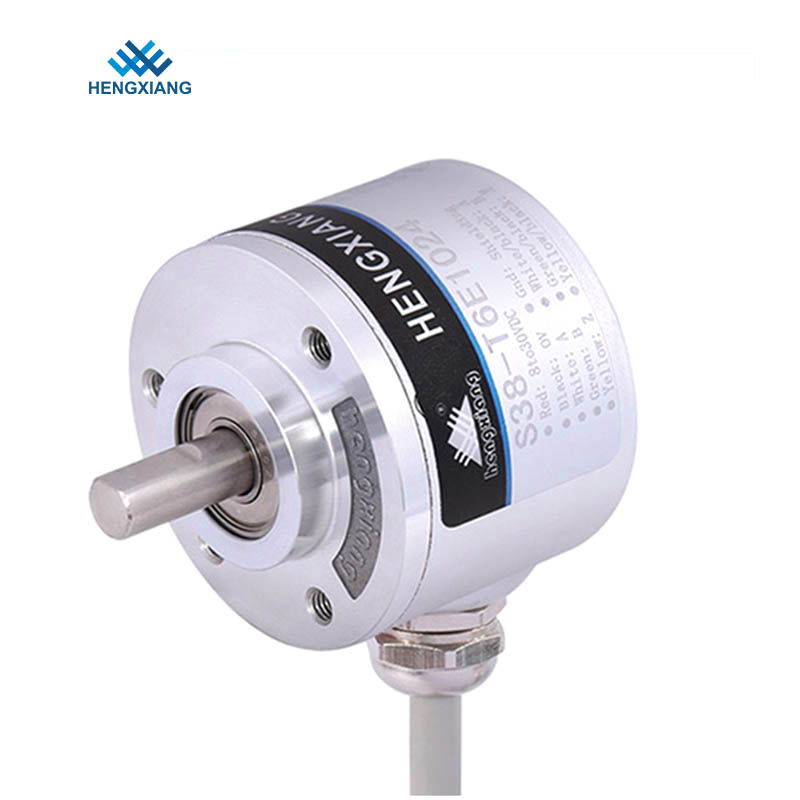
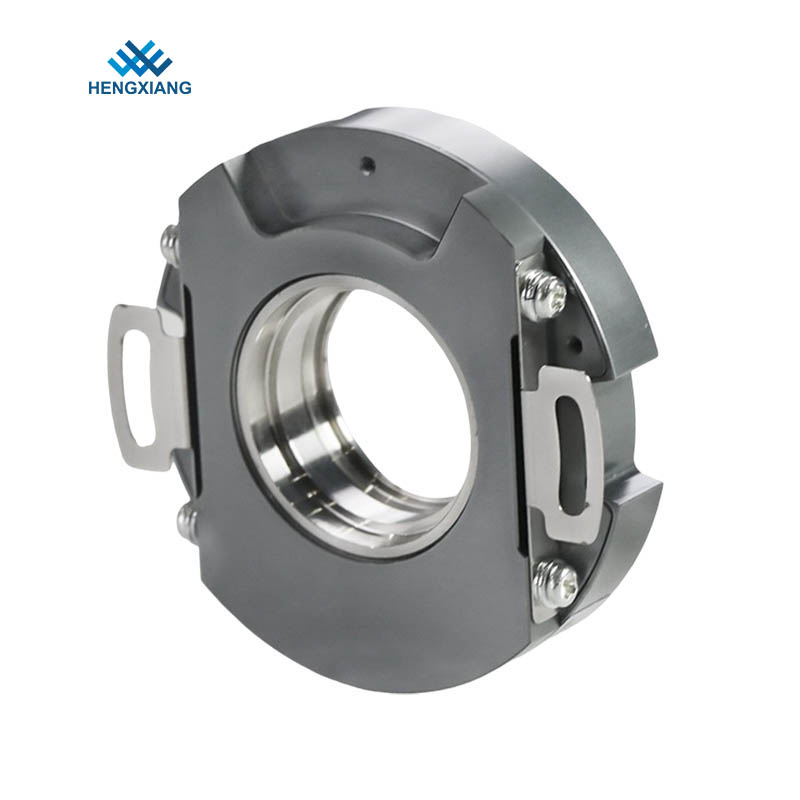
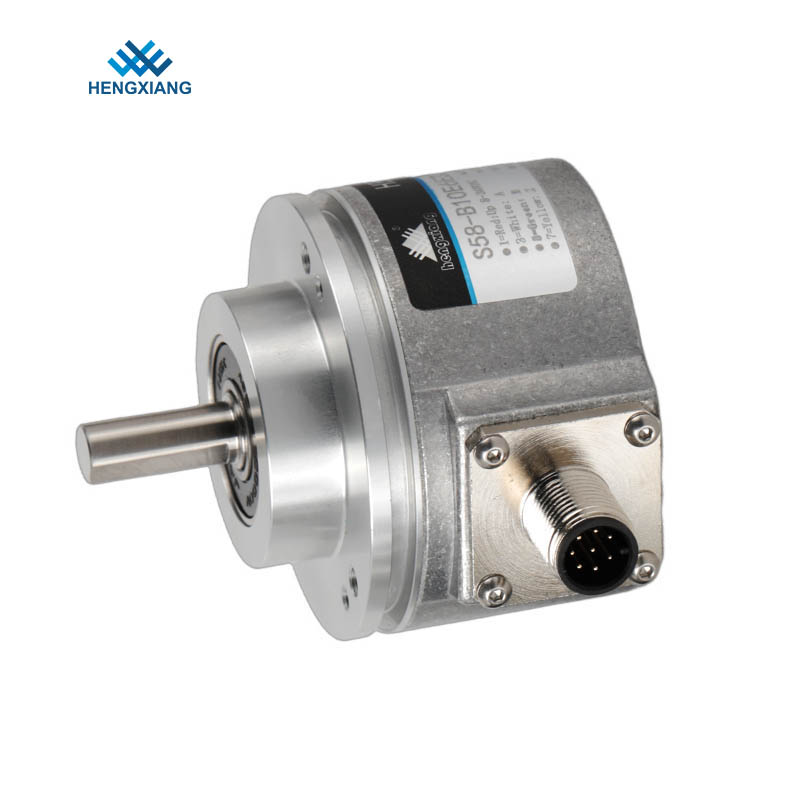
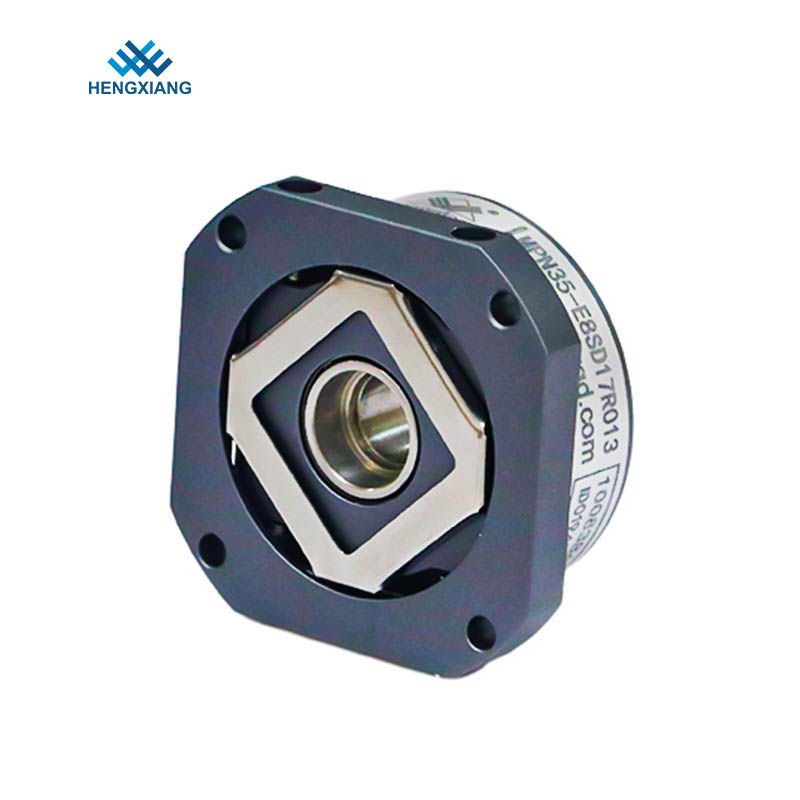
When selecting position and speed feedback devices for industrial automation, engineers frequently face the choice between incremental solid shaft encoders and their hollow shaft counterparts. While hollow shaft encoders offer the distinct advantage of slipping directly over a motor shaft to save axial space, incremental solid shaft encoders remain the industry standard for a multitude of applications. Their enduring popularity is driven by several primary advantages, particularly concerning mechanical versatility, coupling flexibility, and cost-effectiveness.
The most significant advantage of a solid shaft encoder is its universal mechanical compatibility. Hollow shaft encoders are strictly limited by their internal bore diameter; they can only be mounted directly onto a shaft that matches or is slightly smaller than their specific aperture. If an engineer needs to measure a shaft that does not match the available hollow shaft sizes, they must resort to complex adapter rings or entirely different encoders. In contrast, a solid shaft encoder is entirely independent of the driven shaft's dimensions. Through the use of flexible couplings, a single solid shaft encoder model can be seamlessly integrated with motor shafts ranging from a few millimeters to several centimeters in diameter. This universality drastically simplifies inventory management and procurement for original equipment manufacturers.
Furthermore, solid shaft encoders excel in their ability to accommodate mechanical misalignment and absorb shock. Directly mounting a hollow shaft encoder onto a motor shaft can sometimes transmit harmful axial or radial loads directly into the encoder’s delicate internal bearings, potentially reducing its lifespan. A solid shaft encoder, however, utilizes an external flexible coupling. This coupling acts as a mechanical buffer, compensating for minor axial, radial, and angular misalignments between the motor and the encoder. By absorbing these mechanical stresses and vibrations, the coupling protects the encoder's precision bearings, ensuring long-term reliability and accurate signal output even in harsh industrial environments with high vibration.
Cost efficiency is another compelling reason to choose a solid shaft variant. The manufacturing process for hollow shaft encoders requires more complex machining to create the large central bore while maintaining the structural integrity and precision alignment of the internal optical code disk. This added manufacturing complexity, along with the need for specialized internal clamping mechanisms, typically makes hollow shaft encoders more expensive. Solid shaft encoders feature a simpler, more traditional mechanical design, making them highly cost-effective without sacrificing core performance metrics like resolution and response frequency. For applications where extreme space-saving is not the primary constraint, solid shaft encoders offer a superior balance of performance and budget.
Finally, solid shaft encoders offer greater flexibility in physical mounting and orientation. While hollow shaft encoders are generally restricted to being mounted directly onto the rotating axis, solid shaft encoders can be mounted in various orientations using different flange types (such as clamping, synchronous, or square flanges). They can be positioned parallel to the driven shaft and connected via a belt, gear, or flexible coupling. This spatial flexibility allows engineers to design more compact or unconventional machine layouts, placing the encoder in a protected area away from direct heat, debris, or physical impacts. Ultimately, the combination of mechanical adaptability, protective coupling, affordability, and mounting versatility makes the incremental solid shaft encoder an indispensable and highly reliable choice in modern motion control systems.
The most significant advantage of a solid shaft encoder is its universal mechanical compatibility. Hollow shaft encoders are strictly limited by their internal bore diameter; they can only be mounted directly onto a shaft that matches or is slightly smaller than their specific aperture. If an engineer needs to measure a shaft that does not match the available hollow shaft sizes, they must resort to complex adapter rings or entirely different encoders. In contrast, a solid shaft encoder is entirely independent of the driven shaft's dimensions. Through the use of flexible couplings, a single solid shaft encoder model can be seamlessly integrated with motor shafts ranging from a few millimeters to several centimeters in diameter. This universality drastically simplifies inventory management and procurement for original equipment manufacturers.
Furthermore, solid shaft encoders excel in their ability to accommodate mechanical misalignment and absorb shock. Directly mounting a hollow shaft encoder onto a motor shaft can sometimes transmit harmful axial or radial loads directly into the encoder’s delicate internal bearings, potentially reducing its lifespan. A solid shaft encoder, however, utilizes an external flexible coupling. This coupling acts as a mechanical buffer, compensating for minor axial, radial, and angular misalignments between the motor and the encoder. By absorbing these mechanical stresses and vibrations, the coupling protects the encoder's precision bearings, ensuring long-term reliability and accurate signal output even in harsh industrial environments with high vibration.
Cost efficiency is another compelling reason to choose a solid shaft variant. The manufacturing process for hollow shaft encoders requires more complex machining to create the large central bore while maintaining the structural integrity and precision alignment of the internal optical code disk. This added manufacturing complexity, along with the need for specialized internal clamping mechanisms, typically makes hollow shaft encoders more expensive. Solid shaft encoders feature a simpler, more traditional mechanical design, making them highly cost-effective without sacrificing core performance metrics like resolution and response frequency. For applications where extreme space-saving is not the primary constraint, solid shaft encoders offer a superior balance of performance and budget.
Finally, solid shaft encoders offer greater flexibility in physical mounting and orientation. While hollow shaft encoders are generally restricted to being mounted directly onto the rotating axis, solid shaft encoders can be mounted in various orientations using different flange types (such as clamping, synchronous, or square flanges). They can be positioned parallel to the driven shaft and connected via a belt, gear, or flexible coupling. This spatial flexibility allows engineers to design more compact or unconventional machine layouts, placing the encoder in a protected area away from direct heat, debris, or physical impacts. Ultimately, the combination of mechanical adaptability, protective coupling, affordability, and mounting versatility makes the incremental solid shaft encoder an indispensable and highly reliable choice in modern motion control systems.