


How do incremental optical encoders operate stably in harsh industrial environments?
Release Time : 2025-12-30
In modern industrial automation systems, incremental optical encoders act as the "nerve endings" of equipment, sensing the position, speed, and direction of rotating axes in real time, providing crucial feedback for servo control, precision machining, and robot motion. However, their working environments are often challenging: machine tool workshops with flying metal shavings, injection molding lines filled with oil mist, heavy machinery with severe vibrations, and even damp and dusty outdoor installations—all of which can interfere with optical components, contaminate internal structures, or cause signal distortion. Facing such harsh conditions, the long-term stable operation of high-quality solid-shaft incremental optical encoders is not due to luck, but rather to the systematic synergy of multiple protective designs, material selection, and signal processing mechanisms, constructing an invisible yet indestructible line of defense for reliability.
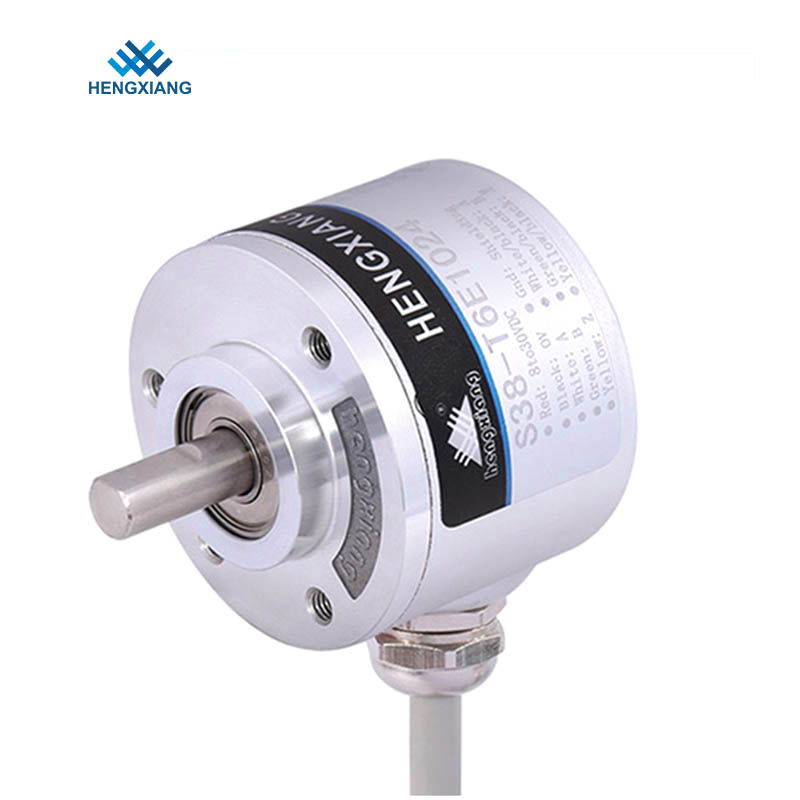
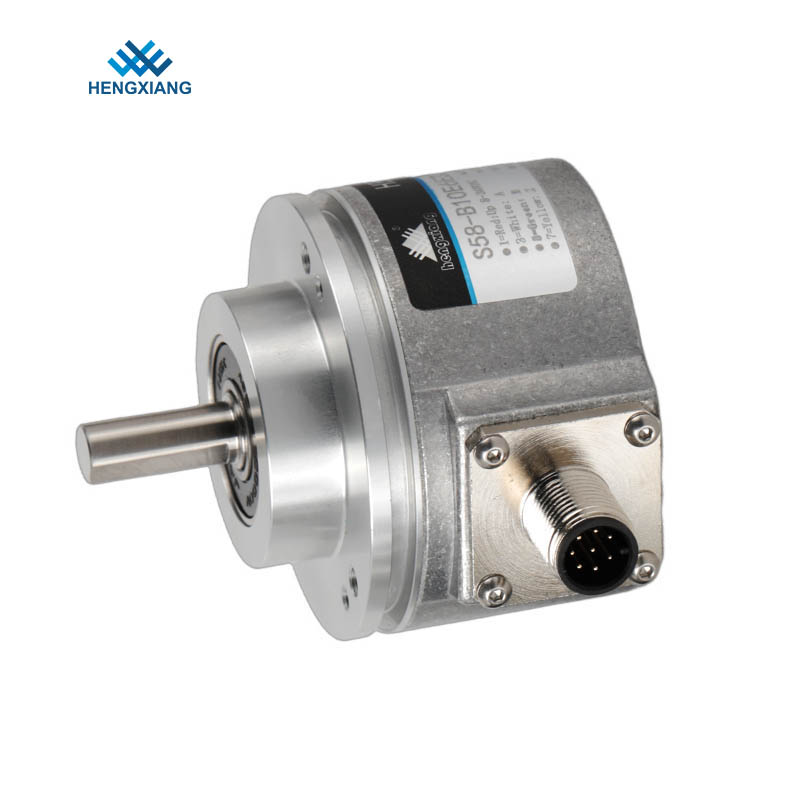
First, a robust mechanical structure is the first line of defense against external impacts. The solid-shaft design itself provides excellent rigidity and torsional resistance, effectively resisting bending deformation under high loads and ensuring the stability of the rotation center. The housing is typically made of high-strength aluminum alloy or stainless steel, which is not only lightweight but also possesses excellent pressure and corrosion resistance. Combined with precision sealed bearings and a labyrinth seal structure, dust, cutting fluid, oil mist, and other contaminants are effectively kept out, preventing them from penetrating the internal optical cavity. Even on equipment with frequent starts and stops or severe vibrations, the encoder maintains shaft concentricity and operates smoothly, avoiding reading jumps due to mechanical misalignment.
Secondly, the airtightness and cleanliness of the optical system are crucial. The core grating disk and photoelectric sensor are completely encapsulated in a clean, dry chamber, physically isolated from the external environment. High-quality encoders are assembled in a dust-free environment and filled with inert gas or use moisture-proof sealant to prevent condensation or lens fogging. The grating disk is mostly made of glass or metal substrate with extremely high surface precision and wear resistance; even with long-term high-speed rotation, it will not generate debris or signal attenuation due to friction. This "clean inside, solid outside" design concept ensures that optical sensing always operates under ideal conditions.
Furthermore, the anti-interference capability of the electrical signals ensures accurate information transmission. Industrial environments are characterized by complex electromagnetic noise, with equipment such as frequency converters, motors, and welding machines easily interfering with weak electrical signals. To address this, high-end incremental encoders commonly employ differential signal output (such as the RS-422 standard), using dual-wire inverted signal transmission to effectively cancel common-mode noise. Simultaneously, internal circuitry integrates filtering and shielding measures, and the power supply incorporates voltage regulation and surge protection to ensure clean and stable output pulses even under voltage fluctuations or transient interference. This allows the control system to accurately interpret the A, B, and Z phase relationships, preventing misjudgments of direction or lost counts.
Furthermore, wide temperature range adaptability expands application boundaries. High-quality encoders utilize electronic components and lubricating materials resistant to high and low temperatures, enabling normal operation even in cold winters or near high-temperature baking lines. The matching material combinations with varying coefficients of thermal expansion also prevent internal stress or optical alignment shifts caused by temperature changes, ensuring measurement consistency across the entire temperature range.
At a deeper level, reliability stems from meticulous attention to detail. From the rubber formula of the shaft seal to the O-ring compression of the housing seams; from the three-proof coating of the PCB board to the locking structure of the connector—every detail has undergone repeated verification and optimization. This engineering philosophy of "redundancy ensures reliability" allows the encoder to operate silently for years on unattended production lines without maintenance.
Ultimately, the stable performance of the incremental optical encoder in harsh industrial environments is not a victory of a single technology, but a deep integration of mechanical, optical, electronic, and materials engineering. It is unassuming, yet proves its value in every precise positioning; it is silent, yet provides the most reliable "eyes" for the entire automation system. When machine tool spindles cut at high speeds, robotic arms grasp precisely, and conveyor belts move seamlessly—behind it all is this small encoder, guarding the order and precision of the industrial world amidst oil stains and vibrations. True reliability is never about avoiding the storm, but about clearly seeing the direction even in the storm.
First, a robust mechanical structure is the first line of defense against external impacts. The solid-shaft design itself provides excellent rigidity and torsional resistance, effectively resisting bending deformation under high loads and ensuring the stability of the rotation center. The housing is typically made of high-strength aluminum alloy or stainless steel, which is not only lightweight but also possesses excellent pressure and corrosion resistance. Combined with precision sealed bearings and a labyrinth seal structure, dust, cutting fluid, oil mist, and other contaminants are effectively kept out, preventing them from penetrating the internal optical cavity. Even on equipment with frequent starts and stops or severe vibrations, the encoder maintains shaft concentricity and operates smoothly, avoiding reading jumps due to mechanical misalignment.
Secondly, the airtightness and cleanliness of the optical system are crucial. The core grating disk and photoelectric sensor are completely encapsulated in a clean, dry chamber, physically isolated from the external environment. High-quality encoders are assembled in a dust-free environment and filled with inert gas or use moisture-proof sealant to prevent condensation or lens fogging. The grating disk is mostly made of glass or metal substrate with extremely high surface precision and wear resistance; even with long-term high-speed rotation, it will not generate debris or signal attenuation due to friction. This "clean inside, solid outside" design concept ensures that optical sensing always operates under ideal conditions.
Furthermore, the anti-interference capability of the electrical signals ensures accurate information transmission. Industrial environments are characterized by complex electromagnetic noise, with equipment such as frequency converters, motors, and welding machines easily interfering with weak electrical signals. To address this, high-end incremental encoders commonly employ differential signal output (such as the RS-422 standard), using dual-wire inverted signal transmission to effectively cancel common-mode noise. Simultaneously, internal circuitry integrates filtering and shielding measures, and the power supply incorporates voltage regulation and surge protection to ensure clean and stable output pulses even under voltage fluctuations or transient interference. This allows the control system to accurately interpret the A, B, and Z phase relationships, preventing misjudgments of direction or lost counts.
Furthermore, wide temperature range adaptability expands application boundaries. High-quality encoders utilize electronic components and lubricating materials resistant to high and low temperatures, enabling normal operation even in cold winters or near high-temperature baking lines. The matching material combinations with varying coefficients of thermal expansion also prevent internal stress or optical alignment shifts caused by temperature changes, ensuring measurement consistency across the entire temperature range.
At a deeper level, reliability stems from meticulous attention to detail. From the rubber formula of the shaft seal to the O-ring compression of the housing seams; from the three-proof coating of the PCB board to the locking structure of the connector—every detail has undergone repeated verification and optimization. This engineering philosophy of "redundancy ensures reliability" allows the encoder to operate silently for years on unattended production lines without maintenance.
Ultimately, the stable performance of the incremental optical encoder in harsh industrial environments is not a victory of a single technology, but a deep integration of mechanical, optical, electronic, and materials engineering. It is unassuming, yet proves its value in every precise positioning; it is silent, yet provides the most reliable "eyes" for the entire automation system. When machine tool spindles cut at high speeds, robotic arms grasp precisely, and conveyor belts move seamlessly—behind it all is this small encoder, guarding the order and precision of the industrial world amidst oil stains and vibrations. True reliability is never about avoiding the storm, but about clearly seeing the direction even in the storm.