


How do incremental solid shaft encoders maintain signal stability and shaft accuracy in high-vibration environments?
Release Time : 2026-01-15
In automation systems such as CNC machine tools, elevator drives, industrial robots, and heavy-duty testing equipment, incremental solid shaft encoders are often deployed under harsh conditions of high vibration and high dynamic loads. Their core task is to provide real-time and accurate feedback of the position and speed information of the rotating shaft. However, continuous mechanical vibration can easily cause signal jitter, phase drift, and even mechanical loosening, leading to misjudgments by the control system. Incremental solid shaft encoders maintain excellent signal stability and shaft accuracy even in severe vibration environments through a robust mechanical structure design, highly reliable electronic circuitry, and precision assembly processes.
1. Solid Shaft Structure: Rigid Support to Resist Mechanical Disturbances
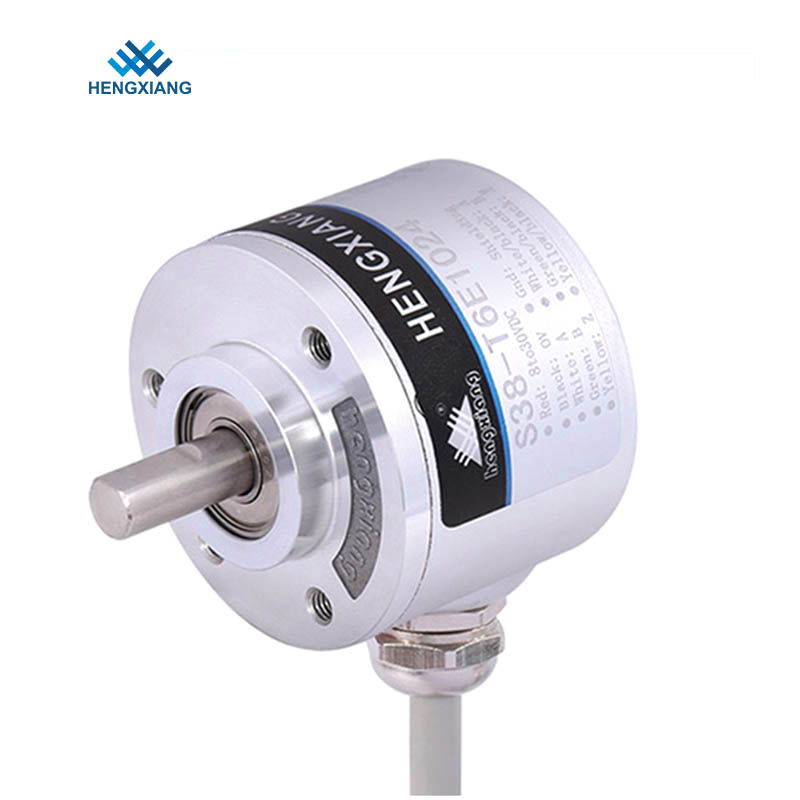
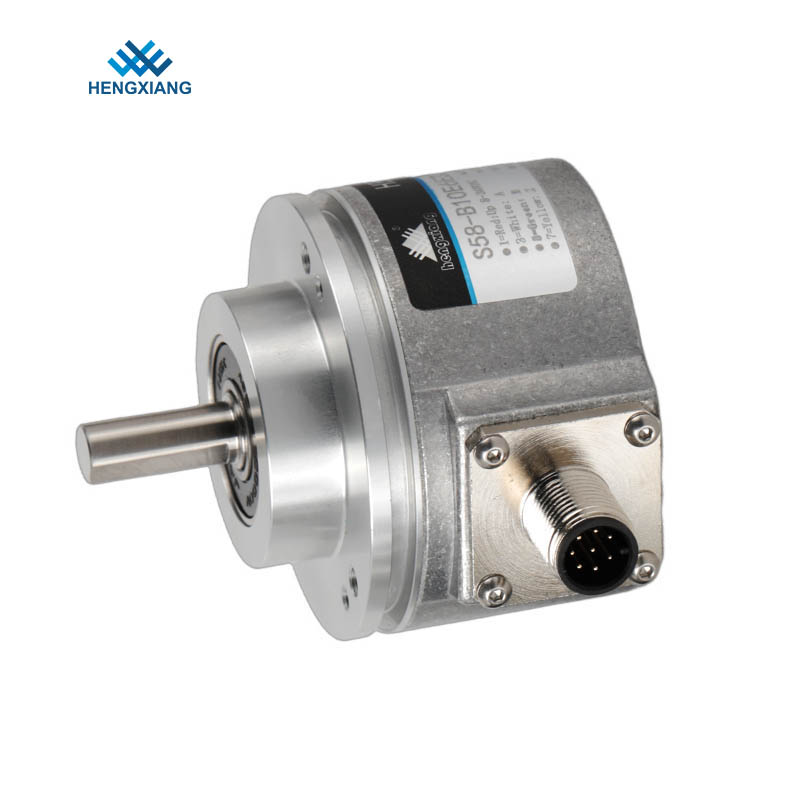
Compared to hollow shaft encoders, solid shafts are machined from a single piece of metal bar, resulting in higher torsional stiffness and bending strength. In high-vibration scenarios, solid shafts are less prone to micro-deformation or resonance, effectively avoiding code disk eccentricity or grating jitter caused by shaft wobbling. Meanwhile, the internal bearings of the encoder typically use high-precision double-row angular contact ball bearings or preloaded deep groove ball bearings. These not only withstand combined radial and axial loads but also eliminate clearances through preload, preventing "shaft slippage" caused by vibration. This ensures the stability of the rotation center and maintains a constant relative position between the optical or magnetic sensing elements and the code disk.
2. Precision Code Disk and Sensing System: Vibration-Resistant Signal Source Design
Whether optical or magnetic incremental encoders, their core sensing components must maintain a high signal-to-noise ratio under vibration. High-end products use a one-piece molded metal code disk or injection-molded magnetic ring to prevent adhesive structures from delaminating and failing under long-term vibration. The optical system is encapsulated in a fully sealed cavity to prevent dust intrusion and interference with the optical path; the magnetic solution utilizes differential Hall sensors or AMR elements to redundantly detect changes in the magnetic field, effectively suppressing signal jumps caused by minute displacements. Furthermore, the code disk mounting surface and shaft employ an interference fit or a keyway + end-face clamping structure to eliminate relative sliding, ensuring the stability of signal generation from the source.
3. Wide Voltage Anti-Interference Circuit: Electronic Vibration "Immunity"
Even with a robust mechanical structure, vibration can still introduce electromagnetic noise through power or signal lines. To address this, modern incremental solid shaft encoders typically integrate wide voltage range circuit designs to adapt to voltage fluctuations in industrial environments. They also incorporate multiple protection mechanisms: reverse polarity protection prevents incorrect wiring from burning out the chip, and short-circuit protection prevents output abnormalities from damaging components. More importantly, the signal output stage often employs differential drive or Schmitt trigger shaping circuits, significantly improving common-mode interference immunity. Even in cabinets densely packed with inverters and servo drives, the A/B/Z phase signals maintain clean waveforms, ensuring accurate counting and direction determination by the PLC or motion controller.
4. Sealing and Protection: Isolating External Vibration Transmission Media
High-vibration environments are often accompanied by oil, dust, or coolant splashes. Encoder housings typically achieve IP65 or even IP67 protection ratings, using O-ring seals, labyrinth shaft seals, and other designs to prevent contaminants from entering the interior. This not only extends bearing life but also prevents instantaneous torque fluctuations caused by foreign object jamming—fluctuations that, though minute, can be misinterpreted as sudden position changes under high-speed sampling. Reliable sealing indirectly improves the system's long-term operational consistency under vibration.
The reliable performance of the incremental solid shaft encoder in high-vibration environments is the result of synergistic optimization of mechanical rigidity, sensing accuracy, and electronic robustness. The spindle provides a stable rotational reference, the precision sensing system generates a pure, original signal, and the wide-voltage, interference-resistant, and protected circuit design ensures that the signal remains undistorted even in harsh electrical environments. These design highlights make it a trustworthy "motion-sensing eye" in industrial automation, accurately "seeing" every minute arc of rotation on production lines subject to constant vibration.
1. Solid Shaft Structure: Rigid Support to Resist Mechanical Disturbances
Compared to hollow shaft encoders, solid shafts are machined from a single piece of metal bar, resulting in higher torsional stiffness and bending strength. In high-vibration scenarios, solid shafts are less prone to micro-deformation or resonance, effectively avoiding code disk eccentricity or grating jitter caused by shaft wobbling. Meanwhile, the internal bearings of the encoder typically use high-precision double-row angular contact ball bearings or preloaded deep groove ball bearings. These not only withstand combined radial and axial loads but also eliminate clearances through preload, preventing "shaft slippage" caused by vibration. This ensures the stability of the rotation center and maintains a constant relative position between the optical or magnetic sensing elements and the code disk.
2. Precision Code Disk and Sensing System: Vibration-Resistant Signal Source Design
Whether optical or magnetic incremental encoders, their core sensing components must maintain a high signal-to-noise ratio under vibration. High-end products use a one-piece molded metal code disk or injection-molded magnetic ring to prevent adhesive structures from delaminating and failing under long-term vibration. The optical system is encapsulated in a fully sealed cavity to prevent dust intrusion and interference with the optical path; the magnetic solution utilizes differential Hall sensors or AMR elements to redundantly detect changes in the magnetic field, effectively suppressing signal jumps caused by minute displacements. Furthermore, the code disk mounting surface and shaft employ an interference fit or a keyway + end-face clamping structure to eliminate relative sliding, ensuring the stability of signal generation from the source.
3. Wide Voltage Anti-Interference Circuit: Electronic Vibration "Immunity"
Even with a robust mechanical structure, vibration can still introduce electromagnetic noise through power or signal lines. To address this, modern incremental solid shaft encoders typically integrate wide voltage range circuit designs to adapt to voltage fluctuations in industrial environments. They also incorporate multiple protection mechanisms: reverse polarity protection prevents incorrect wiring from burning out the chip, and short-circuit protection prevents output abnormalities from damaging components. More importantly, the signal output stage often employs differential drive or Schmitt trigger shaping circuits, significantly improving common-mode interference immunity. Even in cabinets densely packed with inverters and servo drives, the A/B/Z phase signals maintain clean waveforms, ensuring accurate counting and direction determination by the PLC or motion controller.
4. Sealing and Protection: Isolating External Vibration Transmission Media
High-vibration environments are often accompanied by oil, dust, or coolant splashes. Encoder housings typically achieve IP65 or even IP67 protection ratings, using O-ring seals, labyrinth shaft seals, and other designs to prevent contaminants from entering the interior. This not only extends bearing life but also prevents instantaneous torque fluctuations caused by foreign object jamming—fluctuations that, though minute, can be misinterpreted as sudden position changes under high-speed sampling. Reliable sealing indirectly improves the system's long-term operational consistency under vibration.
The reliable performance of the incremental solid shaft encoder in high-vibration environments is the result of synergistic optimization of mechanical rigidity, sensing accuracy, and electronic robustness. The spindle provides a stable rotational reference, the precision sensing system generates a pure, original signal, and the wide-voltage, interference-resistant, and protected circuit design ensures that the signal remains undistorted even in harsh electrical environments. These design highlights make it a trustworthy "motion-sensing eye" in industrial automation, accurately "seeing" every minute arc of rotation on production lines subject to constant vibration.