


How can an incremental hollow shaft encoder achieve stable and reliable motion feedback in complex industrial environments?
Release Time : 2026-01-22
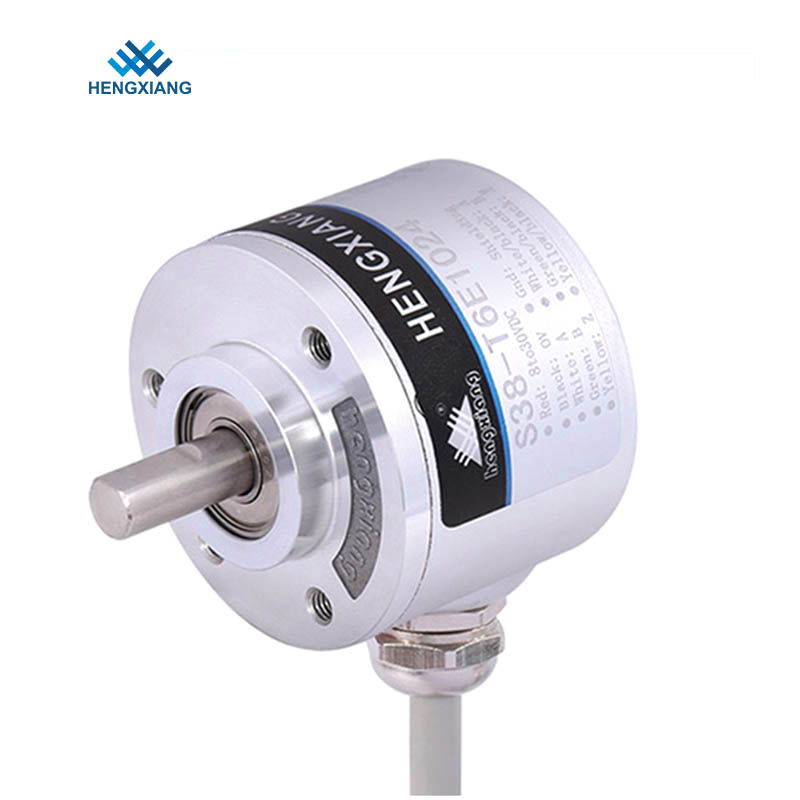
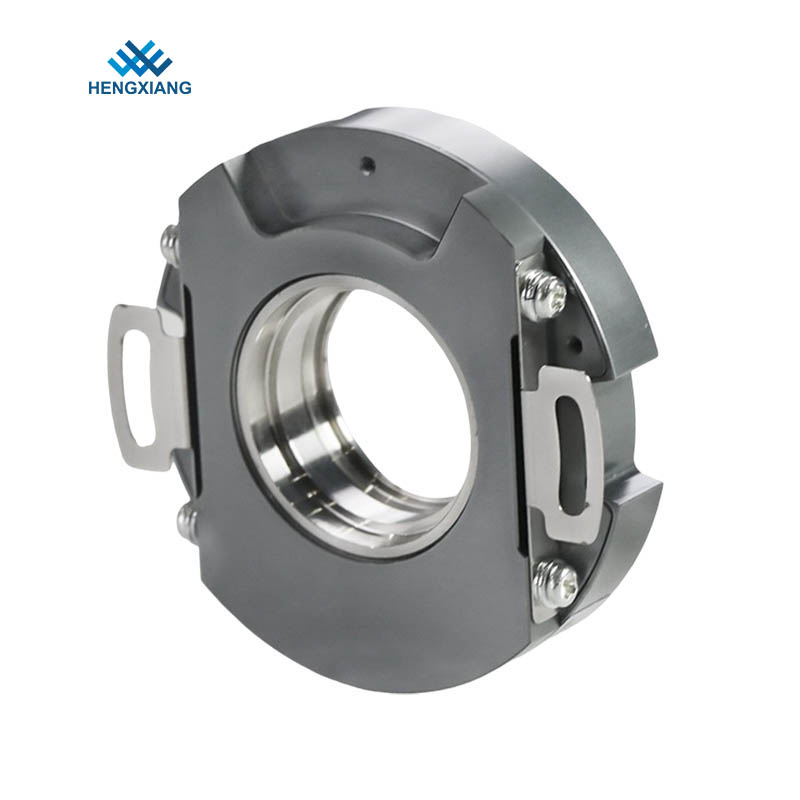
Deep within the high-speed operation of automated equipment, precise position and speed information is fundamental for the control system to make correct decisions. Whether it's spindle positioning of CNC machine tools, angle tracking of robot joints, or speed synchronization of conveyor belts, a key sensing element—the incremental hollow shaft encoder—is indispensable. Its unique hollow shaft structure allows motor shafts or drive shafts to pass directly through, eliminating couplings, simplifying installation, and improving response accuracy. However, industrial environments are often filled with interference factors such as electromagnetic noise, voltage fluctuations, and wiring errors, which can easily cause ordinary sensors to distort their output or even be damaged. The reason why a high-performance incremental hollow shaft encoder can operate stably for a long time in such harsh environments stems from its systematic design in electrical protection, signal processing, and mechanical integration.
Its reliability is first reflected in its robust power adaptation and protection mechanisms. Equipment typically operates in factory power grids with unstable voltage; surges or voltage drops at startup can impact electronic components. This type of encoder supports a wide range of DC power supply. Even if the input voltage fluctuates within a certain range, the internal voltage regulator circuit can still provide a constant operating voltage for the photoelectric sensor and signal processing chip, ensuring that the output pulse frequency and phase relationship remain accurate. Simultaneously, the built-in reverse polarity protection circuit effectively prevents component burnout caused by reverse power connection; the short-circuit protection function automatically limits current in case of accidental short circuits in the output line, avoiding permanent damage. These protective measures significantly reduce the failure rate caused by wiring errors or power grid anomalies, improving the robustness of the equipment.
More importantly, the anti-interference capability ensures signal purity. Incremental encoders generate two orthogonal pulses (A and B) and a Z-phase signal through a grating disk and photoelectric detector. Weak electrical signals are easily affected by electromagnetic interference from frequency converters, high-power motors, or wireless devices, leading to counting errors or signal jitter. High-end products use a full metal shielded housing to effectively isolate external radio frequency noise; the internal circuit layout follows low-noise design principles, with signal lines and power lines routed separately and incorporating filtering and isolation components. Some models also employ differential signal output (such as RS-422), utilizing dual-wire transmission to cancel common-mode interference, ensuring clear and stable signals even over long distances.
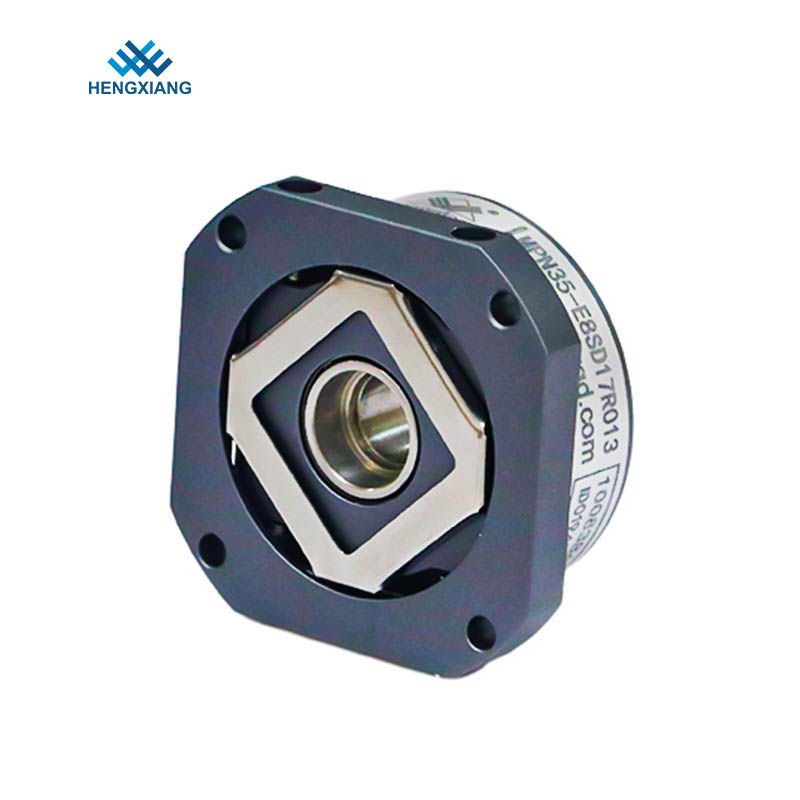
The hollow shaft structure itself enhances the ease of mechanical installation and dynamic response accuracy. Since the encoder is directly mounted on the rotating shaft, no additional coupling is needed, saving space and eliminating measurement errors introduced by coupling elastic deformation or installation eccentricity. This "zero-backlash" direct connection allows the encoder to accurately reflect the instantaneous motion of the shaft, making it particularly suitable for applications with high acceleration or frequent start-stop cycles. Simultaneously, the bearing system is precisely selected and pre-tightened to ensure low vibration and low friction even under high-speed rotation, extending service life.
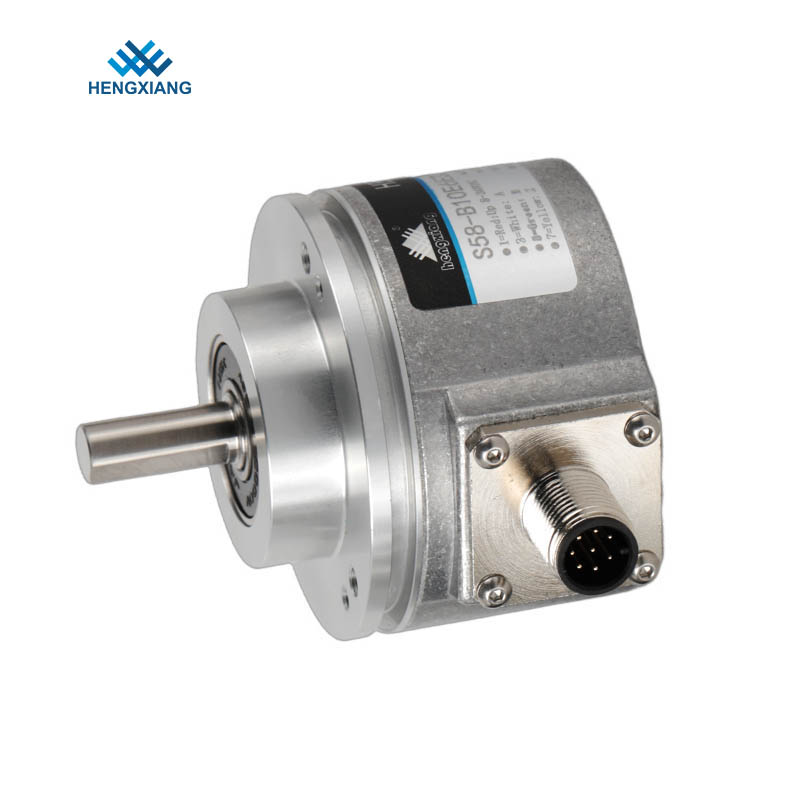
Furthermore, environmentally adaptable design expands application boundaries. The sealed housing structure is dustproof and splashproof, suitable for humid or dusty workshops; the wide operating temperature range meets deployment requirements from cold storage to high-temperature workshops; and the connector or cable outlet features a locking design to prevent loosening due to vibration. These details collectively form a protective barrier against harsh external conditions.
Ultimately, the value of an incremental hollow shaft encoder lies not in the number of pulses it outputs, but in the reliability and accuracy of each pulse. It transforms complex physical motion into a clean, stable, and trustworthy digital language, becoming the "nerve endings" that allow automated systems to perceive the world.
Because in the world of precision control, true reliability means allowing a machine to hear its own heartbeat even amidst noise. And the encoder, quietly fitted onto the rotating shaft, is the most faithful recorder of that rhythm.
Its reliability is first reflected in its robust power adaptation and protection mechanisms. Equipment typically operates in factory power grids with unstable voltage; surges or voltage drops at startup can impact electronic components. This type of encoder supports a wide range of DC power supply. Even if the input voltage fluctuates within a certain range, the internal voltage regulator circuit can still provide a constant operating voltage for the photoelectric sensor and signal processing chip, ensuring that the output pulse frequency and phase relationship remain accurate. Simultaneously, the built-in reverse polarity protection circuit effectively prevents component burnout caused by reverse power connection; the short-circuit protection function automatically limits current in case of accidental short circuits in the output line, avoiding permanent damage. These protective measures significantly reduce the failure rate caused by wiring errors or power grid anomalies, improving the robustness of the equipment.
More importantly, the anti-interference capability ensures signal purity. Incremental encoders generate two orthogonal pulses (A and B) and a Z-phase signal through a grating disk and photoelectric detector. Weak electrical signals are easily affected by electromagnetic interference from frequency converters, high-power motors, or wireless devices, leading to counting errors or signal jitter. High-end products use a full metal shielded housing to effectively isolate external radio frequency noise; the internal circuit layout follows low-noise design principles, with signal lines and power lines routed separately and incorporating filtering and isolation components. Some models also employ differential signal output (such as RS-422), utilizing dual-wire transmission to cancel common-mode interference, ensuring clear and stable signals even over long distances.
The hollow shaft structure itself enhances the ease of mechanical installation and dynamic response accuracy. Since the encoder is directly mounted on the rotating shaft, no additional coupling is needed, saving space and eliminating measurement errors introduced by coupling elastic deformation or installation eccentricity. This "zero-backlash" direct connection allows the encoder to accurately reflect the instantaneous motion of the shaft, making it particularly suitable for applications with high acceleration or frequent start-stop cycles. Simultaneously, the bearing system is precisely selected and pre-tightened to ensure low vibration and low friction even under high-speed rotation, extending service life.
Furthermore, environmentally adaptable design expands application boundaries. The sealed housing structure is dustproof and splashproof, suitable for humid or dusty workshops; the wide operating temperature range meets deployment requirements from cold storage to high-temperature workshops; and the connector or cable outlet features a locking design to prevent loosening due to vibration. These details collectively form a protective barrier against harsh external conditions.
Ultimately, the value of an incremental hollow shaft encoder lies not in the number of pulses it outputs, but in the reliability and accuracy of each pulse. It transforms complex physical motion into a clean, stable, and trustworthy digital language, becoming the "nerve endings" that allow automated systems to perceive the world.
Because in the world of precision control, true reliability means allowing a machine to hear its own heartbeat even amidst noise. And the encoder, quietly fitted onto the rotating shaft, is the most faithful recorder of that rhythm.