


Can a bearing-essence magnetic encoder achieve ultimate simplification of high-precision position feedback through non-contact sensing?
Release Time : 2026-01-30
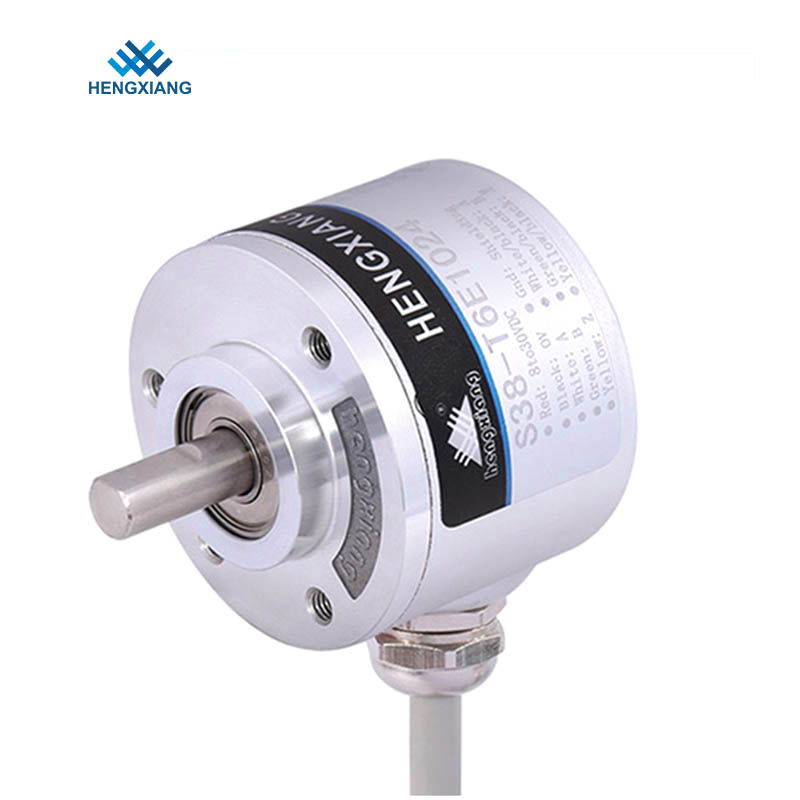
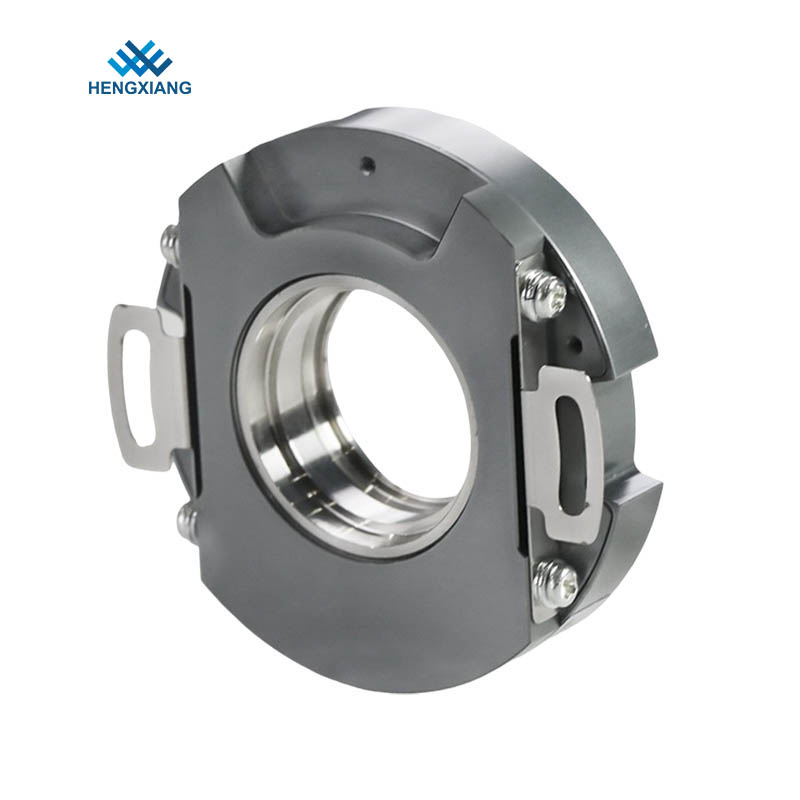
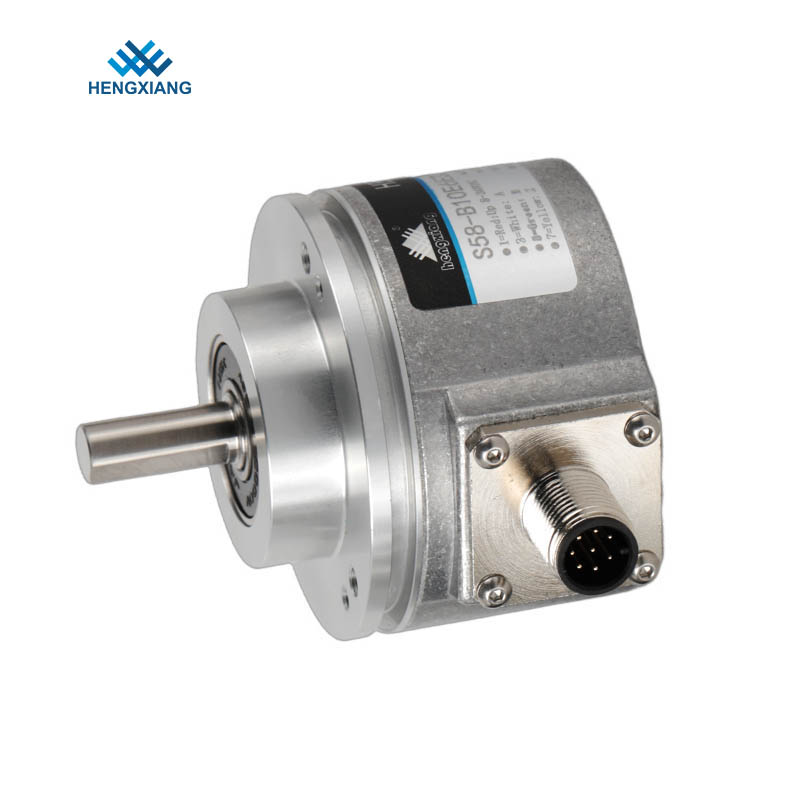
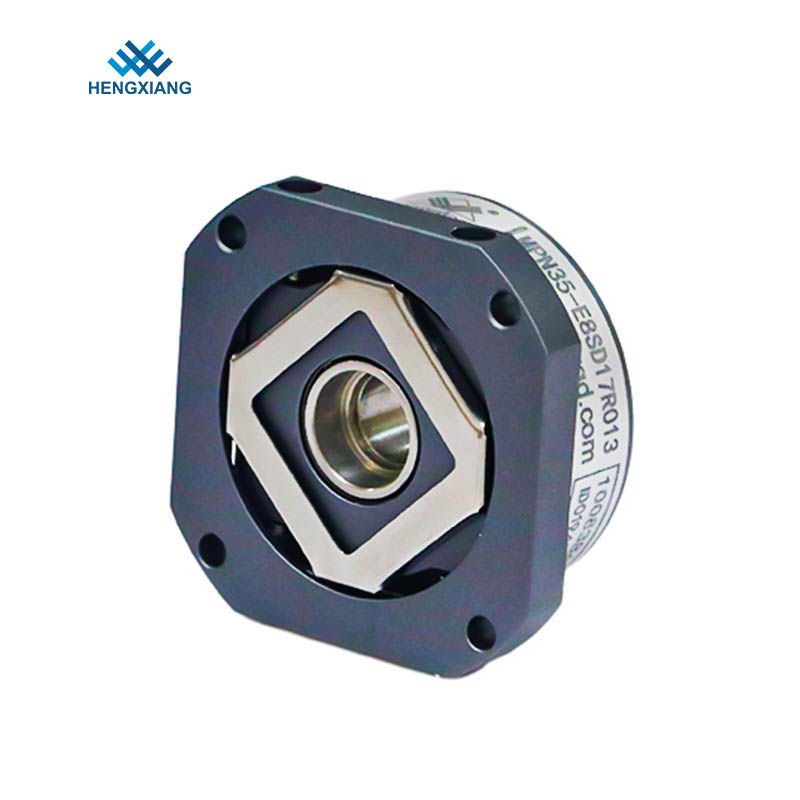
In modern automation, robotics, and precision motion control, real-time sensing of rotational position, speed, and direction is crucial for stable system operation. Meanwhile, the bearing-ess magnetic encoder (hollow shaft type) – a rotary sensor that abandons traditional mechanical bearings and adopts the principle of magnetic induction – is redefining the reliability and adaptability of position feedback technology with its advantages such as simple structure, strong anti-pollution ability and convenient installation. it accurately captures shaft dynamics solely through changes in the magnetic field, demonstrating superior robustness compared to traditional encoders in harsh industrial environments.
Its core value stems primarily from the inherent reliability improvement brought about by its bearingless design. Traditional encoders rely on precision bearings to support rotating components, which are susceptible to wear, jamming, and even failure due to dust, oil, vibration, or impact during long-term operation. The bearing-ess magnetic encoder eliminates this mechanical connection. The rotor is usually a lightweight ring with an embedded permanent magnet, which is directly fitted onto the shaft being measured. The stator integrates Hall or magnetoresistive sensors and remains stationary. There is no physical contact between the two components, completely eliminating frictional loss, significantly extending service life, and substantially improving shock and contamination resistance.
Structurally, the hollow shaft design provides excellent installation flexibility and space adaptability. The central through-hole allows easy insertion of motor shafts, lead screws, or hydraulic rods without couplings or complex alignment adjustments, saving assembly time and space. It is particularly suitable for compact equipment with limited space or requiring multi-axis stacking, such as collaborative robot joints, medical imaging devices, servo motors, or CNC rotary tables. The lightweight construction also reduces rotational inertia, avoiding interference with the spindle's dynamic performance and ensuring measurement accuracy at high speeds.
A deeper significance lies in its ability to handle harsh working conditions. Magnetic encoders are unaffected by oil mist, condensation, metal dust, or strong light, and can operate stably in humid, dirty, or high-vibration environments where traditional optical encoders struggle. Its signal output is stable, with resolution sufficient to meet most industrial control needs, and it possesses excellent electromagnetic interference resistance. Some models also support absolute value output, ensuring position information is not lost after power failure, eliminating the need for zeroing operations and improving system startup efficiency and safety.
Furthermore, modular and standardized interfaces accelerate system integration. Products typically offer multiple communication protocols (such as SSI, BiSS, analog, or incremental square wave), compatible with mainstream controllers; high enclosure protection levels adapt to industrial environments; and diverse installation methods support flange, screw, or clamp fixing. This "plug and play" characteristic allows engineers to quickly complete commissioning, shortening equipment development cycles.
Ultimately, the value of a bearing-essence magnetic encoder lies not in its complexity, but in how it achieves the most reliable sensing with the simplest structure. When a robotic arm precisely positions itself in an oil-stained workshop, or when medical equipment rotates smoothly in a cleanroom—behind it lies the silent flow of a magnetic field, translating mechanical motion into digital language. Because in the world of precision control, true intelligence is not about piling up parts, but about returning sensing to its essence—touchless, undisturbed, and consistent.