

-
2026-02-26 2026-02-26
How can incremental linear encoder signal subdivision technology improve measurement resolution?
From a hardware perspective, the subdivision technology of incremental linear encoders primarily relies on improvements in the precision of code disk manufacturing. -
2026-02-19 2026-02-19
How does an incremental optical encoder ensure reliability against vibration and interference?
In modern industrial automation systems, the incremental optical encoder, as a core sensor for position and velocity feedback, directly impacts the control accuracy and operational safety of the equipment. -
2026-02-10 2026-02-10
How can an incremental linear encoder achieve high-precision displacement measurement through photoelectric conversion?
The manufacturing precision of the grating ruler directly determines the resolution. High-precision encoders require the use of a laser interferometer to calibrate the grating spacing to ensure that the error is less than the micrometer level. -
2026-02-05 2026-02-05
How does a multi-turn absolute encoder integrate single-turn photoelectric sensing and multi-turn magnetic induction technology to achieve high-precision absolute position detection?
Traditional incremental encoders cannot provide absolute position information, while early multi-turn absolute encoders relied on mechanical gear sets to record the number of turns, resulting in defects such as wear, short lifespan, and poor shock resista -
2026-01-30 2026-01-30
Can a bearing-essence magnetic encoder achieve ultimate simplification of high-precision position feedback through non-contact sensing?
In modern automation, robotics, and precision motion control, real-time sensing of rotational position, speed, and direction is crucial for stable system operation. -
2026-01-22 2026-01-22
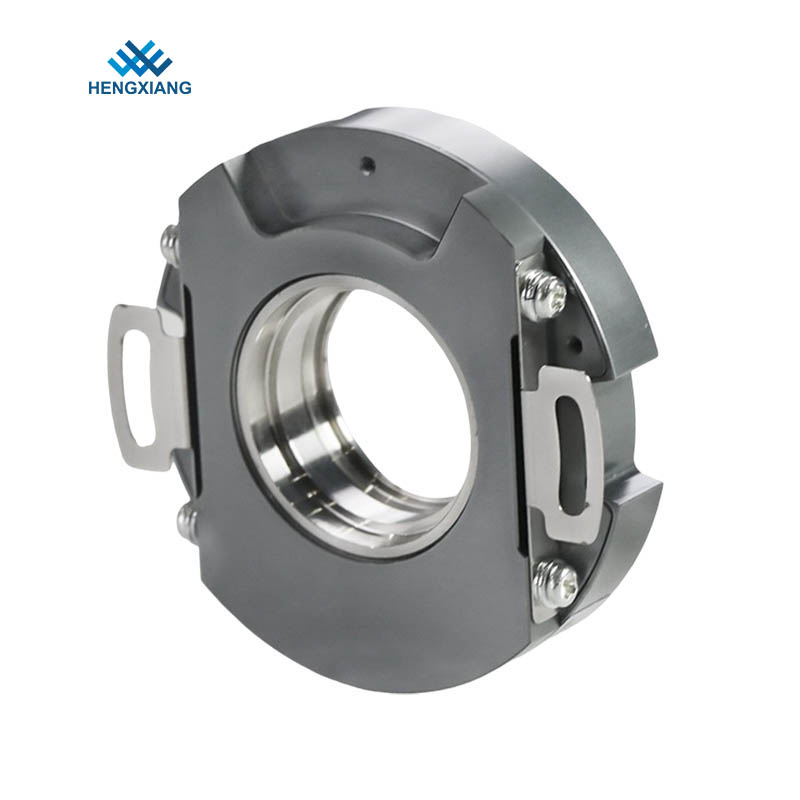
How can an incremental hollow shaft encoder achieve stable and reliable motion feedback in complex industrial environments?
Deep within the high-speed operation of automated equipment, precise position and speed information is fundamental for the control system to make correct decisions.